


Zurzeit sind 567 Biographien in Arbeit und davon 340 Biographien veröffentlicht.
Vollendete Autobiographien: 217


Introduction

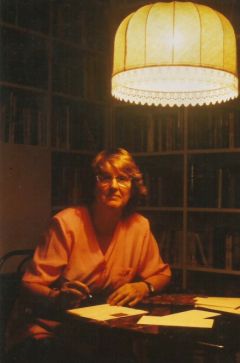
Valerie Walder grew up in London. After receiving her qualifications as an infant teacher, she taught in a State School for 5 years before marrying a Swiss and moving to Basel in 1959. She has continued to teach and thrive in spite of having three children and a divorce. She has taught English in chemical firms, language schools and privately. She is co-author of a new business English course created for one of the chemical firms and is still teaching today although mostly on Skype.
My intention was to start writing my memoirs just before I was nearly fifty – the title then may have been “Five to Fifty”. However, time has passed and I am now 89 and tempus fugit. It has always been my students who have urged me to start writing the different stories I have told them when something reminds me of episodes or conversations in my life. The title this time could be “Kaleidoscope” or “Collide & Scope” as my nephew suggested, saying that I had collided with a lot of people in my life and the scope, over various countries has also been considerable. I originally intended only to write of amusing elements but have since been persuaded that this would be a rather one-sided depiction of my life. Things have very often not been easy but I feel no bitterness now, though I very often did once. People are as they are and can change only if they wish to. Thanks go especially to my students past and present who, through their support, have often helped me through the bad patches. Above all, I have been honest throughout the following reminiscences, very often living visually through the events in my memory hopefully avoiding being boring so that my readers may find these bits and pieces entertaining and/or interesting. Valerie Walder 2023

I learned from my mother that I had been born with black hair but by the time I had my first haircut it had changed to a reddish blond.
Day One Plus, First Slap, First Teeth
Of course, I cannot actually remember being born, but I had it on the best authority - my mother’s - that it was on a Friday, at lunchtime and she was quite sure of this as the whole clinic smelt of fish. Could this have influenced my taste buds so that I later preferred eating fish to eating meat? It was the 27th of July and I was ten days late. I should have been born in Cancer but just slipped into being a Leo. Whether you believe in star signs or not, I seem to be a mixture of both signs. However, as a baby, such things did not concern me. It was only when my younger sister was born, two and a half years later, that I can recall the first important event in my life. As my mother was very ill with puerperal fever and my sister was born three months early weighing only two and a half pounds, I was sent to stay with friends of hers as she and my sister had to stay in hospital. We were pretty poor and, compared to us, this family was quite rich. It was a Sunday and there were guests for afternoon tea. I had never seen a table laden with so much food and the very best, in my eyes, was a chocolate Swiss roll where even the ends were covered in chocolate.
“What would you like Valerie?” asked the lady of the house.
I pointed to the amazing Swiss roll and was shocked to have my hand slapped - the first time in my life that I had been slapped.
“We don’t point,” said the lady. “That’s rude. We say ‘Please may I have a piece of Swiss roll.” However, she relented and I was given the slice of Swiss roll I wanted. This lady was also responsible for teaching me the word ‘pardon’ to be said when I didn’t understand something. I was delighted with this new word and used it at every opportunity. My mother said I was like a little robot programmed to say ‘Pardon’ whenever anyone said something to me and she was overjoyed a couple of weeks later when I said ‘What?’
My interest in words seems to have manifested itself early on - not only with the word ‘pardon’. I talked in whole sentences when I was only eighteen months old, but I was toothless. One lady said to my mother, “Your child hasn’t got any teeth. How old is she?” (Thinking that I was older by the way I was talking). My mother took me to the doctor’s.
“My daughter hasn’t got any teeth. Is something wrong?”
“Patience, Mother, the teeth will come when they come.”
And so they did, which proved to be an advantage as my second teeth came late, too.
To return to the subject of words, I must have been about three and a half when I got an annual for Christmas. This contained lots of stories and verses. On one right-hand page at the bottom was a tiny picture and a poem about a stile. This fascinated me, as living in London, I had never seen one. Later on, in the same book, was a rhyme about a family of rabbits called the Fluster Busters. It began like this;-
Fetch me my hat!
Fetch me my stick!
For goodness’ sake be quick!
The little Fluster Busters
Rushed madly to and fro
For Mr Fluster Buster
Would be very cross they -
Here came the aggravation. The missing word was ‘knew’ but this did not rhyme with ‘fro’. ‘Know’ would rhyme, but would not make sense.
My mother did not believe in dummies, thinking they were unhygenic so I sucked my thumb. “Now promise me you won’t suck your thumb,” said my mother when she put me to bed. Automatically my thumb reached up to my mouth and it was difficult to force it down. It was also difficult to get to sleep without the comfort of it stuck in my mouth. Had my mother insisted on breaking me of the habit earlier, I wouldn’t have developed an overbite. My three children all had dummies.
When I was under two years old, my father took me to his work place, I imagine to show me off to his colleagues. I remember two things about this visit. The first was that I was well turned out and the second was being lifted up by him to show me how clean the wash basin was that he had cleaned. This did not impress me at all as Mummy cleaned our wash basin every day and it was just as shiny bright. Was cleaning wash basins what he did at work every day?
The Pram
The strong rubbery smell of the pram cover hooked up to the hood of the pram to keep the rain out on a rainy day is the first thing I remember about this old-fashioned black prom. The second thing is how unstable it was because the large wheels were placed close together. I would be placed in this old-fashioned pram for a nap in the garden on a sunny day. This custom stopped one day, not because the weather changed, but because the large wheels being close together allowed me from inside the pram to capsize it and land myself, flat on my back, on the grass. (The reason for backache today?)
The Added Dangers of Having a Bath
When I was still very little, some kind person gave me twin dolls, a boy and a girl. It was summer, so perhaps they had been a birthday present. One sunny day I wanted to give my twins a bath. My mother put our tin bath out on the concrete at the back of the house - no one called it a patio in those days! She then filled it with warm water. I undressed the dolls and sat them in the warm water. What happened next was horrifying - they totally disintegrated and their four eyes stared up at me floating alone on the top of the water. The dolls had been made of papier mache.
Not to Mention Fire!
“Mummy! Mummy!” I yelled rushing into the kitchen from the garden. “Daddy’s burning!” I had seen smoke coming up between my father and the Sunday newspaper he was reading seated in the garden. Somebody had given him a cigar and, as he had never smoked before, I thought he was on fire.
The First Green?
Walking round a field of flowers so as not to tread on them. My mother and father walked diagonally through and, I have the feeling that they laughed at me.

Unwanted Hair at All Ages
For some unknown reason, when I was about five, a hair started growing out of the end of my nose. My mother wanted to pull it out, but I was afraid it would really hurt so I didn’t allow anyone to touch it. I guess it got to be nearly an inch long. A little boy came to play with me and was invited to stay to tea. He sat opposite me at the tea table. “Ooh! I can feel that hair tickling me!” he exclaimed. Perhaps, needless to say, the hair disappeared very fast and he was never invited again! I wonder if, in time, he became a little more tactful?
A New Use for Potatoes
My little sister, Mary, who was about three years old at the time, was sitting on her ‘potty’ on the red-tiled floor of our kitchen. She wanted to hold my favourite doll, which was made of china. She had an angelic face and beautiful blond hair that could be combed. She was called Evangeline after Harriet Beecher Stowe’s heroine in her famous book ‘Uncle Tom’s Cabin’.
“Oh, no! She’ll drop her!” I cried, holding her closer to my chest.
“How can you be so mean to your little sister?” said my mother. “Let her hold her.”
With misgivings I handed over my beloved doll and Mary dropped her. I looked in horror as her beautiful face smashed into tiny pieces on the tiled floor and her socketless eyes rolled around like two marbles.
“I TOLD you she’d drop her!” I shouted in wild despair. I imagine that my mother must have felt bad about what had happened. She certainly did her best to find a replacement head but there was a war on and it was difficult enough to get necessities let alone luxuries such as a new doll’s head. So it happened that darling Evangeline came to sit in a corner of the sofa sometimes with a potato on her shoulders and was renamed ‘Old Potato Head’. She was never dropped again because she was never played with - that is not until my sister and I found the fascination of playing ‘Doctors and Nurses’ when Old Potato Head became the star patient. She actually DID get a new head at the end of the war, but she never recovered her former beauty partly because it was the wrong size and partly because it was fixed on with sticking plaster.
Books - How I Love Them!
As a child I was surrounded by books, but they were mostly my father’s. Apart from his normal nine-to-five job he collected books, not to read and enjoy, but to sell if possible at a profit. The family though never profited from this activity, so whether it was worth the effort or not remains a mystery. In fact we were losers in that we lost the front room that should have been our sitting-room, because it was given over to his collection of books. We were allowed in there only on cleaning day when my mother let us tie dusters to our feet, so my sister and I could pretend to be ice-skaters, thus having fun and polishing the floor at the same time.
Among the collection were a few hard-back children’s books in mint condition. I was allowed to read these after washing my hands first. I had also learnt never to bend a book backwards or dog-ear the pages. These stories were often the source of nightmares, which I’ll tell you about in another place. In any case, I learnt to honour books for the pleasure and information they gave, but most of all they gave me my fascination with words, which later became a fascination with languages.
As I had missed at least a year of schooling through the schools in London being closed at the beginning of the war, my mother was asked to help me catch up with the other children who had been evacuated. My mother should have been a psychologist! She had a good insight as to what to do even though she had had no training as a teacher. She bought a story book that looked exactly like a grown-up novel. It had hard, yellow covers and I could not wait to be grown up enough to read it. The first story is engraved on my memory. The first page had a woodcut print of a large, open cupboard and a little woman wearing a kind of crinoline and a hat with a flounced brim. She was peering into the cupboard. The story was about a teeny, tiny woman who lived in a teeny, tiny house. One day she found a teeny, tiny sixpence in her teeny, tiny garden so she decided to go to the market to buy her teeny, tiny dog a teeny, tiny bone. (By now you will have guessed the first two words I was able to read)!
It was dark when the teeny, tiny woman arrived home so she put the teeny, tiny bone in her very large cupboard. (To me this did not fit in with the rest of the story. Why was the cupboard so big when everything else was so small?) To return to the story: in the middle of the night, the teeny, tiny bone cried, “Let me out! Let me out!” In this way, learning to read was forever associated with nightmares about claustrophobic bones. It did not stop me though from devouring any books I could lay my hands on! Left alone and not sent out to play, I could read a book in a day and the teeny, tiny bone was not the only thing to give me nightmares.
One day Peter was out in the garden. Suddenly he saw a little gnome sitting on one of his apple trees. “Hello, hello!” Said the little gnome. “Hello,” said Peter. “Why are you sitting on one of my apple trees?”
“Your apple tree indeed,” said the little gnome crossly. “Who said it was your apple tree? It’s the fairies’.”
“It isn’t!” said Peter.
“I’ll tell you what I think you are,” said the little gnome crossly. “You are a nasty rude boy.”
Peter was so taken aback at this remark that he said no more, but let the little gnome speak.
The gnome said, “Peter, would you like to go to Fairyland?”
“Oooh, yes!” said Peter.
“All right then,” said the gnome. “Peter, do you see that log there? Well, get on it behind me.”
Peter did as he was told. The gnome, whose name was Pip-Pop, said some magic words to the log and away they went to the king’s castle. Before long they reached it. It was made of pure gold and had lots of turrets and towers. The gates were made of iron and swung open to anyone in Fairyland. So when Peter and the gnome came Peter was surprised to see the gates open like human beings.
When Peter was before the king the king was angry because Peter had trodden on his toe and he hopped about in such a funny way that all his attendants laughed in spite of themselves. This made the king very angry.
“Come here, Peter,” he said. “You will be put in a dungeon and starved.”
The unlucky Peter cried, the king still hopped because his toe hurt him, and people laughed, all except the gnomes who held the chains.
The king at last stopped hopping. Peter struggled to get free but could not. At last the gnome got hold of him and put his chains on while others went to stuff the chimney up in case he should take it into his head to climb up it. Peter was soon in his dungeon looking for a way to escape. At last he heard footsteps. And all of a sudden he thought of a plan. He went a little way up the chimney where he could not be seen.
Soon the footsteps came nearer and an elf looked in. Because he couldn’t see Peter he ran off to tell the king but he forgot to shut the door! Peter soon got down in the chimney and away he went looking for a signpost to tell him how to get home. After a long time, he found one. Soon he was running to the edge of Fairyland. He soon got there, stood still for a minute wondering how he could get out of Fairyland when someone pushed him over the edge. Down, down, down he fell. At last he landed bump, bump on a haystack.
I expect you will wonder who pushed Peter over the edge of Fairyland. Well, it was the king. He saw all that had happened because he was in a tower. So he just came after him. When Peter saw where he was he was so startled that he sat still for a moment. Then he ran home and told his mother.

First Nightmare
Dreams for me as a child were in colour and always very vivid and realistic. The good ones have long since faded but a couple of nightmares are still fresh in my memory. Apart from the teeny, tiny bone nightmare, I had one that recurred several times and which caused me to wake up screaming in the night. It was only many years later that I could realise where it had originated. In my dream, I would be playing in the garden with some friends when I would suddenly come under what seemed to be a big shadow or cloud. At this point, I seemed to be alone in the garden. Looking up, I would be shocked to see a (to me) huge black figure looming over me from its position sitting on the garden fence. In terror I would try to run up the garden to the safety of the back door into the kitchen, but my feet would become entwined in the skipping rope I had been playing with. It was at this point that I would scream and wake up in a cold sweat. My mother would calm me down until I could fall asleep again.
The origin of this dream occurred some time before when my mother was looking after a little girl called Ann whilst her mother was in hospital having her second child. We had gone shopping with Ann aged two or three in the pushchair and I aged five or six walking alongside. “Wait here a moment Valerie and hold on to the pushchair. I’m just going into this newsagent’s to buy a newspaper.” Ann followed my mother with her eyes as she went into the shop and I concentrated on keeping the pushchair still. “Ook!” said Ann, pointing with her finger. (She had a speech impediment - she meant ‘Look’. Later it was discovered that she was partially deaf - her mother had had German measles while carrying her). Having learnt at an early age that it was rude to point (see Day One Plus, First Slap, First Teeth) I pushed her arm down saying, “Don’t point, Ann. It’s rude”.
Suddenly this huge (to me) black man was towering over me, shaking his fist in my face and shouting, “How dare you point at me! I’m just as good as you are!” Not only was I shocked and terrified, but the injustice of his remark rankled as I had NOT pointed at him and had tried to stop Ann from doing so. This then must have been the reason for my horrifying nightmare.
Second Nightmare
As soon as I could read, I devoured any book I could come across. It was not so easy to find books during the war, but my father, who collected books to sell, had a collection of Andrew Lang’s fairy tales. Each book had a different coloured cover and I was allowed to read one after the other so long as I washed my hands first and was careful not to bend back the covers. A lot of these stories were quite frightening causing me to look under the bed and in every nook and cranny before going to bed. At that time another recurring dream took over from the previous one. In my dream I could hear big footsteps behind me, heavy footsteps getting nearer and nearer. I would then run as fast as I could but my small steps got me no nearer to safety. During one of these nightmares, I said to myself, “You really are silly! This is only a dream. If you pinch yourself hard, you‘ll wake up!” I pinched myself hard in the thigh and woke up and that was the last time I had that nightmare!
Third Nightmare
The long, white cotton robe (or nightdress?) came down to my ankles and my feet were bare. I didn’t look up but looked down at those bare feet. I could hear the sounds of people all around me murmuring or just moving about. I was standing on a pile of sticks and my hands were tied to a stake behind my back. Suddenly there was a loud shout and I could hear the wood begin to crackle and I could see smoke curling up between my toes. The smoke got into my nose and mouth. “Thank goodness!” I thought to myself, “I shall suffocate before I burn”. It was at this moment that I awoke to find that I really could not breathe as I was at the very bottom of the bed with all the covers over my head. I fought my way out of them, so thankful that it had just been a dream.
It was only years later, when I recalled this dream, that I realised that, when I had been looking down at my feet, it was from the height of a woman and not from the height of the eight- or nine-year-old child I was then.
Health and Safety?
An old farm was situated at the end of our London street when my sister and I were young. The pear and plum orchards belonging to it had gone to rack and ruin, but were paradise to us. Some of these pear trees were also at the bottom of our garden. The fruit produced each autumn were small and hard as bullets and inedible - but, of course, we had to sample them always with regrettable results! The old orchard disappeared long ago and there is now a large housing estate there. The only green left is small patches of grass imitating village greens between the rows of houses. If only we could have taken a photograph of our old ‘playground’ it would have looked like an overgrown jungle. To my sister and I though it was a magical place to play Robin Hood with our homemade bows and arrows, climb trees and light fires. We were normally barefoot and alone as all the other children in the neighbourhood had been evacuated. On arriving home after a long day playing, our long- suffering mother would regard us with resignation and simply say, “Into the bath at once!”
My Grandmother
Of course, everyone has four grandparents but I had only two as my father’s parents had already been dead for some time - his father in his mid thirties in Australia. My maternal grandmother, Mary Elizabeth, was very petite, only about five feet tall. She could easily walk under my grandfather’s outstretched arm without touching it. It is difficult to believe that she had had four children, two girls and two boys. She always wore a hat with a veil when she was out and she always looked smart in the clothes of her generation. My mother could remember her wearing long Edwardian dresses that swept the ground. When it rained, the hems got soaked and she had to hold them up and, at the same time, keep an eye on her children. At that time in London there were trams, not buses and these were pulled by horses. At the foot of the hill in South East London, where they lived in a tall town house, there was a stone trough where the horses could drink before attempting the next hill.
I remember her kitchen well. There was an old-fashioned dresser with Cornish pottery on display and an enormous stove which served both as a cooker and a heater. This monster had to be treated with blacking once a week. When it got dark, which it did fairly early as the kitchen was in the basement, she lit the gas lamp hanging from the ceiling with a long taper. The gas light was soft and gentle.
If my sister and I were too noisy, she would say, “Hush! Let‘s see if there are any strawberries in the garden.” We would walk through the scullery, where there was a stone floor and a very big sink with a dripping tap. Her tabby cat, Mickey would sit in this sink and hold his paw under the dripping tap to drink. This was where the dirty work was done, such as washing vegetables or clothes and cleaning shoes and where there was a door into the back garden. My grandfather was a fantastic gardener and this garden was as neat as a new pin. A narrow gravel path led through two narrow lawns and this path was edged with flower beds. The wild strawberry plants were right at the edges under the flowers and we somehow always managed to find a couple of ripe strawberries whatever the season. At the end of this garden was a romantic little trellised building covered with roses. This was the outdoor toilet. There must have been another toilet in the house as well as a bathroom, but I cannot remember ever seeing it. Sitting on the toilet in the ‘garden house’ was a scary business as large spiders abounded among the roses.
One evening during the last part of the war when my grandfather was out, the air raid warning sounded and my grandmother went under the stairs in the basement with her cat, Mickey. (Under the stairs was considered to be the safest place in a house and I spent many nights there sleeping on my stomach on cushions that wandered during the night, with my left arm around the family dog.) A bomb fell on the house, a direct hit, and she was buried for two days before she was found and rescued. At about nine o’clock that morning my grandparents stood sadly at our front door. “We‘ve been bombed out,” they said.
Of course, they came to stay with us. I left my small bedroom to share my sister’s room where my nights were not so peaceful even when there was an air raid free night. She often talked in her sleep. Occasionally she would sit up in bed and carry on a conversation with someone in her dream. One evening I remember telling her in no uncertain terms to shut up and go to sleep. She silently lay back in bed in slow motion - a truly eerie thing to watch. In later life, she had a daughter who used to walk in her sleep.
Well, my grandparents settled in in our house as well as in the Anderson shelter. Here my parents slept on one side down below with my grandparents on the other side. My sister and I had narrow bunks that rested on the concrete walls forming the base of the shelter. However, in the morning, I would be the only one on top as my sister would roll over in the night and fall out. She would land exactly between the two sleeping couples below and spend the rest of the night there.
My grandmother would never tell us how old she was.
“I’m as old as my little finger and a little older than my teeth.”
“How old are your teeth, grandma?”
“Not quite so old as my little finger.”
“Well, how old is your little finger, grandma?”
“A bit older than my teeth.”
We never managed to catch her out. Infuriating! We think she died when she was about sixty-five - much too young in any case. My mother was convinced that her terrible experience of being buried alive for two days shortened her life. Not only this, but she had packed two suitcases with things valuable to her such as family photo albums. These two suitcases were stolen by disgusting looters, no doubt hoping to find money. Instead they stole her life!

My Grandfather
My grandfather was the oldest of his father’s two large families and he was sent out to work at the age of fourteen. His job was carrying crates and sacks and stocking the shelves in a shop. As a result he got flat feet. When he was about eighteen he saw an advertisement urging young men to join the police. At that time, a policeman had to be six feet tall so as to strike an imposing figure. That was no problem for my grandfather but his flat feet were. In those days, policemen started off by walking the beat. He was turned down. Determined to be accepted, he cured his flat feet with exercise and hot and cold showers. The following year he was accepted. After a time of walking the beat, he was given a bicycle which had a small oil lamp to give light at night. One evening when rounding a corner his light blew out - something that happened pretty regularly. At this exact moment he came face to face with his superior.
“Nash, your light is out!” he rather obviously stated.
“Sir,” said my grandfather, “so is yours!”The wind did not differentiate between ranks!
My grandfather rose to be an inspector in the police and used to boast that he collected more years’ pension than the years he had worked (he died when he was ninety-three). He was a great sportsman boxing at the Albert Hall for the police and beating eighteen-year-olds at tennis. In old age, he would watch boxing on his black and white television sitting very close with a newspaper over his head. He would become fully involved in the match saying for example “Your left, your left, not your right you ******!” and the newspaper would jump up and down with his excitement.
He was always interested in everything and kept up to date with the news, walking to the newsagent’s every day to get his daily newspaper. He gave up smoking when he was seventy but later suffered from hardening of the arteries in his legs. He would then walk around the flat and ask my mother if he had walked as far as the newsagent’s. As he was obviously in pain, my mother would say he had, even if he hadn‘t.
My mother was working in a school at that time as a teachers’ help and her anecdotes about school life fascinated him. She told him one day of the burial service one class had held for their class hamster that had died. Later on, as they were watching an old Western on television, there was a scene of a mound with a cross on top, “Somebody else‘s hamster has died?” asked granddad.
After retirement, he managed the large garden of an acquaintance, who had a large house in the neighbourhood. He was also very musical teaching himself to play the piano by ear to concert proficiency as well as the banjo.
One day, when the estate owner was on holiday, he took my mother, sister and I‚ ‘to see how the other half lived’. I can see the stylish rooms now. The sitting-room was all white - a lush thick white carpet covered the floor, the fireplace was all white as was the grand piano in one corner. There was a grand feeling of space and light.
“What shall it be?” asked granddad flipping imaginary coat tails as he sat on the piano stool. “Sing me something.”
The only song we could think of was ‘Three Blind Mice’. Grandfather then played an introduction, then the tune with accompaniment and embellishments.
The dining-room had a long, solid oak refectory table and tall wooden chairs. There was a red brick fireplace with a shiny brass warming-pan hanging at its side. The simplicity of both these rooms, their style and grace became my dream of perfection and awakened the desire to be an interior decorator.
For years my grandfather had a mistress whom he married when my grandmother died. “Never be jealous,” my mother once said to me. “If you are, you can drive a man into another woman‘s arms.” Whether my grandmother was jealous before without reason or later with reason, I cannot judge. However, my grandfather’s second wife had bouts of insanity and had to stay in clinics from time to time.
“God has punished me,” remarked my grandfather.
True or not, I have always had great admiration for this man who, after very poor beginnings, developed his talents and made a full life for himself.


My Mother
My mother, Doris Mary Nash, was born on the 24th November, 1905, the second child of my grandparents, the first being her brother Wiliam. She later had a little sister who tragically died at the tender age of about three and a half after suffering from measles. Her younger brother, Edward (Eddy) David Nash was born on the fifteenth of January, 1915 so was ten years younger than my mother who later on became a second mother to him. Having two brothers probably helped her to become a tomboy and to put up with teasing. On a trip to London Zoo she was given a ride on a baby elephant that, unfortunately, later died. She was then often told that this was all her fault - she had been too heavy for the poor animal.
She told me that her brother liked to feed the hens they had with bread soaked in alcohol and then watch them stagger about quite drunk. I cannot believe that my mother agreed with this treatment as she was always very fond of even strange animals. For example, as a child she collected stick insects. These lived in a shoe box and grew to a fair length. One day she was horrified to find that at least one of them had escaped. It was only when she saw my grandfather in his old clothes digging in the garden that the escapee was seen. It was swaying on the back of his jacket while he was working. It must have crawled from its box up the door where my grandfather's gardening jacket hung. This would not have been so bad had my grandfather not been afraid of them and wanted to get rid of them. Somehow my mother managed to chat to him and rescue the insect without his noticing.
Later, her pets became somewhat bigger. She had a big dog that had three puppies and she used to take them up onto Blackheath for their early morning walk before she set off for work. They were free to bound over the open fields as they would respond to her piercing whistle produced with her fingers between her teeth - something I tried to do and never could! One morning she was accosted by a young man with obviously ‘evil intentions’.These were immediately forgotten when, answering my mother’s whistle, four large dogs converged on them from all directions. He ran away as fast as his legs could carry him! I wonder if he ever tried his luck again? Well, maybe after seeing there were no dogs around.
When she was seventeen, she started work in a factory painting the faces of clocks for cars. She hated the job there and earned only two pounds a week. She left the job to go into insurance and there she met Maud who became a close friend. The two used to go to dances and whist drives at the local Liberal club - although the family did not vote Liberal! It was in this club that she met my father whom she took a dislike to at once. Unfortunately, as it turned out, she changed her mind after hearing his sob story of being all alone and took him home to meet my grandparents. They disliked him and forbade her to bring him home again. This fact caused her to feel even more sympathy for him and she agreed to marry him. Another chance to escape then occurred when he collapsed in the street with a duodenal ulcer and they were advised to wait for a year. Had he been made welcome at her home, maybe she would have come to realise his real character and escape but this was not to be. They got married on St Valentine’s Day, 1931 when my mother was twenty-six (a dangerous age for the females in this family - my grandmother, my sister and I also got married when we were twenty-six!)
They started their married life in a three-room mostly basement flat where my mother became pregnant after five months. She became ill and the boy called John was born at seven months on his father’s birthday and died. After this sad event they moved to a better flat where I was born, my godmother being a retired infant teacher living in the same house. When I had just started walking we three moved into the house in south-east London where I grew up.
My mother was a very strong person partly because she had to be, but she always had a good sense of humour and was a very good mother to my sister and me. She later became famous to all my students through the anecdotes I told them about her. “That reminds me of my mother, (or of what my mother said)” was when they sat back in their chairs and waited to be entertained.
We were not allowed in the kitchen when she was cooking: “You'll be in there often enough when you get married!” she'd say. She used the same knife for preparing vegetables and this got ever shorter with sharpening until the blade was hardly an inch long. Kitchen utensils were given names: “Pass me Sammy spatchelor” if we happened somehow to set foot in the kitchen. The cooker there was a rather temperamental gas stove and she once appeared without eyebrows as the stove had blown back at her and singed them off. When small, we were washed down in the kitchen sink and that’s where hair-washing was done. However, she always warned the neighbours when she was about to wash our hair as our screams were so horrendous, she was afraid they’d think she was murdering us.
On the kitchen table was also the bottle of embrocation rub for my father and a bottle of tonic for me after my bout of chickenpox and measles. One day she gave me a teaspoonful from the wrong bottle and it was she who screamed loudly to the next door neighbour. Her older son, about eighteen at the time, leapt the high fence, rushed into the kitchen and stuck his fingers down my throat to make me sick. I wasn't. Neither was I sick after drinking some horrid concoction of I don’t know what. This episode really shocked my mother as she did her best in war time to keep us healthy. Sometimes though I am not sure her intention was justified. For example, she was convinced that our paddling in Thames mud was healthy. “Rich people pay a lot of money for mud baths,” she’d say, “and we can have it for free.”
Near the Thames there was also our favourite ‘Plum Pudding Hill’ (our name for it) which we would climb together with our dog Flicka and roly poly down - the dog as well.
There was no refrigerator in the kitchen but a pantry. This was built out of part of the kitchen, also with a tiled floor and a small window, not with glass, but with some kind of gauze facing north. Meat would be hung up there in the draught, pickled onions were in a stoneware jar and a cucumber would be stood on the floor in a jar with some water in it to prevent its drying out. One day, a rescue cat we had rushed into the pantry and sunk its teeth into the cucumber - it seemed to like it. Was it a vegetarian cat? Our dog loved drinking tea. Well, to everyone their own preference.
Christmas pudding making required everyone to stir the mixture in the large pudding basin for good luck. About two years later, whilst cleaning out the broom cupboard, my mother discovered one of her Christmas puddings long forgotten as it had got pushed to the back of the top shelf. It was still edible and tasty when cooked at last. The large pudding basin became a container for frog spawn. A large stone was placed in the middle so the little frogs could climb out and it was not long before they were jumping all over the kitchen, had to be caught and released in a more convenient place. Hedgehog families were also looked after and it was lovely to see a mother with her babies round a bowl of bread and milk - no one thought this bad for them in those days! Birds were welcome and visited the garden in flocks when Flicka was lying asleep on the lawn. She hated cats and the birds knew they were completely safe with her.
Magic Mealtimes
Mealtimes were magical when my father was away and we could relax. Sometimes my mother would say, “Tonight it’s Mozart” which would mean that we had to sing in Mozart’s style if, for example, we wanted to have the salt passed to us. The most dramatic meals were the Wagner evenings. We also talked in pirate language - “Avast ye scurvy knave!” my mother once said to me, probably wanting to take that back if possible. I actually found this funny as I WAS a scurvy knave having pretty advanced psoriasis by then. (See: The Plague)
Opera often featured at mealtimes as did heroes and heroines from books. “Eat up your porridge Valerie!” said my mother. “Oh, Mummy, I’m not Valerie today. I’m Nancy and Mary is Peggy!” (I was an Arthur Ransome fan). Another day I would be Josephine, a teenager who lived opposite and wore a really lovely school hat that kept its shape in the rain unlike my felt one that went all floppy.
My Mother (continued)
My mother read to us at bedtime and even when the going got hard we would not allow her to leave anything out. We all three cried over “Uncle Tom’s Cabin”, “Black Beauty” and many more. At other times my Teddy and my sister’s would have verbal battles between our two bedrooms every evening improvised by our mother. It was a wonder we could sleep after all the excitement! Actually, it was a wonder I could sleep at all on the Pyrenees, my mother’s name for the two lumpy mattresses on my bed. The idea was that the lumps of one would fit into the depressions of the other but this was wishful thinking. I would wriggle between the lumps and bumps and sooner or later find the Land of Nod.
Our mother was the centre of our world especially during the war when my father was sent into the country along with Woolwich Arsenal as this, of course, became a target for the Germans during the war. Whilst he was away we could relax, as much as the bombing would allow. My mother started knitting and made a cardigan for my sister which I found difficult to look at, perfectionist as I was even then. There should have been a fancy row of knitting above the ribbing border, but she had forgotten it on one side and, as she had knitted quite a lot on top of that, refused to correct it. However, not to be put off, she bought enough wool to make herself a cardigan. She had a pattern to go by but - “I'm too fat for this pattern,” she said, “so I'll use bigger needles and add on some stitches.” It was not until she had nearly finished one side that she realised that most of the wool had been used up and that the piece she had made was pretty enormous. This knitting lay around for ages as food for moths and I don’t believe the garment was ever finished.
My mother always tried her best to keep the peace and I can remember her only once saying anything in anger.
“Oh, you make me sick!” she once shouted at my father.
“Then be sick and get it out of your system”, he replied.
This then became a cliche whenever any of the three of us was fed up.
I think I once heard my mother crying during the night and accused my father of hurting her. He tried to persuade me that she had been laughing, but I was not convinced.
She had a thing about legs.
“What lovely strong legs” she said of a photo of my daughter standing on a stool to play with water in the wash basin.
When we were strolling down by the river and were passed by two Scots in kilts, she said:
“Let's follow them, they’ve got lovely legs!”
Perhaps needless to say I was terribly embarassed. My mother was over seventy at the time. The Scots did not react so maybe they hadn’t heard. She said a similar thing when she first met bearded Klaus wearing ragged cut-off jeans.
“He's got lovely legs - but he looks like a little cave man”.
Another ‘interest’ was underpants. She was terribly shocked when Aunty Rhoda visited us on an extremely hot day and confided in her that she wasn't wearing underpants.
“Oh, good Heavens!” exclaimed my mother, “What would you say if you were run over by a bus?”
“If I was run over by a bus,” remarked Aunty Robinson, “I wouldn’t be in a fit state to say anything!”
For Christmas one year I gave her a sweet little angel that was immediately turned upside down to check that she was dressed decently in panties.
She often surprised me as her reactions were often not what I expected. When I was accompanied home by a man called Kultar (I remember his name as it reminds me of coal tar soap) wearing a turban I was terrified that my mother would see him. It was most unusual at that time to see anyone wearing a turban. I had been to an all-night dance in town and Kultar, a student, had asked me to dance and later to accompany me home.
“Just to the station then,” I said.
At the station he bought, what I thought was a platform ticket to see me on the train. Oh, no! He came with me and would not be persuaded to return when we arrived but insisted on seeing me to my door.
“Perhaps Mummy will still be in bed,” I thought hopefully - it was about six o’clock in the morning.
It was not to be! When I reached the garden gate, my mother opened the front door to put the milk bottles out for the milkman. Kultar said politely, “Good morning, Mrs Hatton.”
“Oh,” my mother said. “Would you like to come in for a cup of tea?”
“Oh, no thank you”, said Kultar, “I just wanted to see your daughter safely home” and he almost ran away shyly. I never saw him again.
My mother liked light classics and on Sunday evenings we always listened to Henry Hall’s concerts from the Palm Court Hotel. As this was a radio programme - no television then - we could make up our own image of the hotel and its palm trees. Much later when she had a small black and white TV we watched a screening of Hamlet. When it finished she breathed a sigh of relief and remarked,
“I'm so happy I don't have to clean that castle - all those dead bodies to roll under the carpets!”
- Conversations with My Mother
“Mummy, I’m just going upstairs to put on some make-up. Can you tell David that I’ll be down in a moment?”
When David arrived and I said goodbye to my mother I noticed that the atmosphere was decidedly chilly.
“Are you going out with my brother?” suddenly demanded my date. He had a twin brother called Peter.
“Of course not!”
“Well, who is John?”
“John who?”
“I don't know who, but your mother seems to”.
“Just a minute. What exactly did my mother say to you?”
“She said, ‘Oh, come in Peter, David, John. Come in whoever you are!’”
So that’s where I inherited my difficulty in remembering names - and they say that a mother is a girl’s best friend!
When my mother was seventy I took the kids to England to celebrate her birthday with her.
"Well, it's nice to see you but why have you come in November - it's such a horrible month".
"We've come to help you celebrate your seventieth birthday".
"You'd better come back next year then - I'm only sixty-nine!"
My Mother’s Later Life
When visiting us on holiday in Italy she ‘went native’ removing my baby daughter's clothes (hand-knitted and hardly dirty) so she could wash them and hang them up to dry on a line over the street as the Italian ladies did. She was not impressed by Swiss black tea: "Call that tea! I call it washing-up water!" And when I decided to cook veal sausages, thinking they would be easy on her digestion, she looked at them - they are by nature rather white - and said, "I can't eat those - they look dead!" Pointing out that she would hardly eat them should they be alive was no help.
My mother had a heart attack when she was ninety and I cancelled lessons, looked for something black to wear as I was dreading the worst. Friends picked me up at the airport and took me to the intensive care unit of the hospital where she was being cared for. There were different attachments to her arms and a yellow oxygen mask over her nose which made her look a bit like a budgie. What can one say in a situation like this?
“How are you feeling?” I stupidly asked.
She lifted up the mask and said, “Bloody awful!” - Two of the most beautiful words in the English language in that situation. My mother was still there!
Later on she was moved to a general ward where a menu would come round for the patients to choose their meals. She wanted just a packet soup.
“If you don’t feel hungry, at least choose something to make you feel better,” I advised.
“It's all right for you,” she said in a loud voice, “You like to eat!”
There were curious glances from others in the ward - “Who is this glutton?”
My mother had to use a wheelchair because of bad arthritis and I wondered how on earth she would deal with the situation after being so active and independent.
“I'll say only this,” said my sister. “Don't stand in front of her or she'll run you over!”
When she was back home from hospital I used to phone my mother every Sunday, sometimes with unexpected results. She was then rather deaf - although sometimes, strangely enough, she heard things she wasn't supposed to hear. Whilst phoning her one day and having to shout to make myself understood, I told her to press the red button on her phone.
“Press the red button, Mum. It will make the sound louder.”
“I've pressed the red button and it's flashing. Do you think it will explode?”
“Of course it won't explode - it just makes the sound louder.”
“Oh, well, can you hear me better now?”
One particular weekend my sister, Mary, was recovering from an operation for in-growing toenails and my niece from a hangover after an office party. My conversation with my mother went like this:
“Hello, Mum. It's Val.”
“Who?”
“Valerie.”
“Oh, how are your feet?”
“It's not Mary! It's your other daughter.”
“Oh, how's your head?”
“It's not Rachel! It's Valerie!”
“Well, where's my dinner then?”
She now thought I was the meals-on-wheels lady. I phoned my sister so she could check on her as she had had a urine infection once before through difficulty getting from her wheelchair to the toilet in time. This infection had led then to irrational behaviour
Another Sunday a friend telephoned me.
"Valerie, today's the day!"
"It's Sunday, so..........?"
"You promised to go to church with me."
"I can't have. I never go to church."
"Yes, you did! Today there's a service at the Paulus Kirche with a guest speaker. It's a fine day, so pop on your bike and I'll meet you outside."
I then phoned my mother.
"Mum, it's Val. Look, I can't chat with you today because it seems I promised a friend of mine I'd go to church with her."
"I thought you said 'church'"
"Yes, I did."
"Are you drunk."
"Well, not now - maybe when I promised."
"I was feeling quite depressed when you phoned. I can't wait to tell your sister!"
My sister told me that she had indeed phoned her to ask if she thought I was all right as I had said I was going to church. The following Sunday when I phoned as usual for our weekly chat she immediately asked:
"How was church?"
"Not so bad - though I did fall asleep during the sermon."
"Thank God! You're back to normal."
Later, when I was teaching English as a foreign language in chemical firms in Basel, Switzerland, I would say, when something reminded me of such a chat we'd had,
"That reminds me of my mother." After the first time this happened, the students would sit back and relax as they knew these anecdotes would usually end with a laugh. After several students had passed the Proficiency exam with flying colours, we were all invited by their boss to lunch in the company's 'posh' restaurant. When I arrived, one of them said, "Our boss wants to hear all about your mother!" This was fine for them but I could hardly enjoy the fine meal. Little did my mother know that she would become famous as far away as Switzerland!
Because she had stiff fingers, I brought my mother a small electric kettle from Germany that could be lifted off the base instead of her having to pull out the plug. When she died, a row of unused electric kettles was found on a top shelf in her kitchen. One early morning back home after her funeral, I went into the kitchen to make my first cuppa of the day. There I got a shock as the light on my electric kettle was on and the kettle was quite hot. As I watched, the light went out. "Well, that's that!" I thought. "The thermostat has gone." (I am still using that kettle today!) Whilst waiting for the tram at the tram stop round the corner, the street lamp hanging above me went out. 'The bulb has broken,' I thought - but the same thing happened a day or so later at another tram stop. 'Mummy, stop playing with the electrics' I said.
As my unofficial brother (see: Unofficial Family) is thought to be rather psychic, and had had a photo of my mother under his mattress 'to send her strength' I phoned him and asked if he had noticed anything strange about his kettle.
"Funny you should ask that. It was hot the other day though I hadn't touched it."
"Was the light on?"
"Oh, no. That's been broken for a long time."
I then told him of my experience which actually didn't surprise him. It's a comforting thought to think that, at times, my mother is close. One wish she had was to have a holiday in a horse-drawn caravan in Ireland. Unfortunately she never managed to do it in this life.
My sister visited a medium at about this time. She asked whether my mother had been present at her funeral. "Yes," she said, "and she was sad to see everyone unhappy."
"What did she think of the vicar?" she asked.
"She said that she wasn't impressed." These words were so typical of what my mother would say. The vicar, as it happened, was a lady and she was black. She also enjoyed chatting up my two good-looking sons!
"What is she doing now?" asked my sister.
"She's getting to know her son," answered the medium. There was no way the medium could have known about her boy dying so soon after birth.
It makes me happy to think that my mother is somewhere about and maybe having more success with electrics than she had on earth!
P.S. My mother once sent me a fairly long article about well known people who had had difficult fathers but who had done well in their lives.
"You see," she said, "I did my best for you!"
Introduction to Siege at Old Folks’ Home
My mother’s last years were spent in a two-roomed bungalow in a community more or less protected by brick walls surrounding the grounds. This community also had medical care present if needed. A sign had to be placed in a window in the evening and taken away in the morning. One morning, my mother forgot to take the sign away and got quite a shock when the attendant nurse walked in - she was in the bath!
There was a problem for some people there in autumn. There were horse chestnut trees in the grounds and in autumn their conkers fell. Unfortunately for my mother, a horse chestnut tree hung directly over the tin roof of her bungalow. The noise of the conkers bouncing on the roof during the night was horrific and caused her lack of sleep. Another problem at that time were the children who would climb over the wall to collect the conkers. This gave me the idea for the following poem:
Siege at Old Folks’ Home
Under tall trees
Squat buildings lie defencelessly
Behind the wall.
In autumn breeze
They seem to wait there breathlessly
For night to fall.
At darkened window, an old man looks out fearfully,
Waiting, waiting for expected attack.
At another, a woman stands fearfully -
Where will they come from, front or back?
In the dusk, figures appear on the wall.
Armed and humped as they carefully fall
In rubber-soled shoes, not making a sound
As they land inside on the mossy ground.
Now hard missiles thrown
And sticks
Reverberate betwixt
The chimney pots
And bouncing, bouncing hit the ground.
The sound is as of pistol shots
And old folks moan
As eager fingers fumbling seek
The hidden bounty, brown and sleek.
Then they disappear like summer rain
These cool marauders satisfied.
The conker season is here again
And their pleasure cannot be denied.
My Father (and the effects of living with a mentally sick person)
Do you believe that everyone has an aura? I do. After some years, when I was about eight years old I think, my father was diagnosed as being paranoid schizophrenic. When I was very young I gradually realised that my father was different from other children’s fathers. We lived in a terraced house, a middle one of four, in a south-east London suburb. When my father left the house, usually dressed in tweeds and plus-fours, he would almost strut as if he were lord of the manor. On coming home, his tweed jacket would be hung on the newel post of the banisters and instinctively I avoided touching it as I went up and down the stairs. Another idiosyncrasy was never to use a short word if he knew a longer, more complicated one. I picked up these words as I heard them again and again and teachers at school must have wondered at my vocabulary. Once, for example, I wanted to borrow a penny or two from my mother. “Please lend me the money, mummy! I’ll reimburse you at the end of the week.”
When I was five the Second World War started. It was just before rationing began and I had a birthday party. My father came and stood at the back door surveying us as we played in the back garden. “Valerie,” he said in a stern voice, “you haven‘t introduced me to your little friends.” As I imagine with royalty, I had to introduce each of my friends by name. Suddenly the sun went in, the fun stopped and that was my very last birthday party at home. However, it was my mother who suffered from his behaviour most of all. He made visitors feel unwelcome, or perhaps they sensed that he was not normal and did not visit again. My mother was isolated. To a certain extent, my sister and I became isolated too. Schools were closed in London for about two years because of the blitz, so my sister and I had no relief from living at home. Not only this, but because most children were then evacuated, we were the only children around. Then my father was sent to work in Leicestershire as he was working at Woolwich Arsenal at that time. The arsenal was, of course, a target for German bombs and had to be protected. While he was away life was happy at home in spite of what was going on outside and my letters to him show that I could think of him as a normal, loving father.
However, as my sister and I grew older, we realised that my father’s behaviour had a pattern. He liked to torment us mentally and enjoyed making us cry. Then the next morning, he would come downstairs whistling. After such an episode though, we had about a fortnight when life would be almost normal.
One evening, my father arrived home and announced to my mother that, because of his periodic headaches, he had visited a specialist in Harley Street - typical of his behaviour - a family doctor was not for him! “He wants to see you!” he said in such a way that my mother was convinced SHE was to be blamed for his headaches. Her visit to the specialist in Harley Street was absolute torment for her as she had never gone by train alone before and because of never knowing if there would be an air raid. She was also afraid of meeting such a grand person. The specialist was extremely sympathetic towards her though. “I‘m afraid I have to tell you that your husband is a very easy case for a specialist to diagnose,” he explained, much to my mother‘s surprise. “His condition would have started early in his youth. Perhaps if it had been diagnosed then, he might‘ve been helped. Now, I‘m afraid, he will only get worse. My advice to you, if you want any happiness, is to leave him.”
“I can‘t,” replied my mother. “I have two children and I couldn‘t manage alone. If I left him, I would have to go out to work and I have no qualifications. The girls would be put in a home. I feel it’s important that they have at least one good parent.” Of course, I learnt this from my mother when I was much older. She just explained to us that Daddy was sick so we had to try and ignore the unkind things he said to us.
My mother’s advice to take no notice of what my father said did little to help. Only when she said I should pretend to be a duck and that his words were like raindrops could I sense them running from my head down my back to disappear in a duck pond. In this way, I could freeze all emotion. This had the effect of freeing me to a certain extent, but made him more tense and angry as his words no longer had the desired outcome.
The constant strain we were under, in addition to being in a highly dangerous place in wartime, led to our over reacting. When he was not at home, we would laugh hysterically about something that was not really funny at all. We would congregate in the haven of the kitchen talking and laughing when, at the same instant, we would stop, in silence, my sister would go to her room and I to mine. Two or three minutes later, we would hear the latch of the garden gate and he would be there. We had sensed his presence at the corner of the street!
Time passed. My father collected books which piled up in the sitting-room so we had only the dining-room to sit in. They had to be kept dry so that room was heated for the books. There were so many that it was difficult to clean around them. I remember my sister and I with cleaning rags round our feet, pretending to be ice-skaters whilst polishing the floor at the same time. 
Since I was very young, I had wanted a bicycle and the experience of my first ride in Leicestershire (see ‘My First Bicycle Ride) had not put me off. From the young age of about eight I had saved any money I had towards my own bike. This was a penny or two pocket money and any money from birthday or Christmas presents. At the age of about ten, I finally had eleven pounds ten and my father took me to a bicycle shop to buy one. The price was twelve pounds ten - a pound short. My father said he would lend it to me. (I wonder what the shopkeeper thought). A few days later, he took me on my first bicycle ride. Of course, although I had been practising, I was still rather shaky especially when turning corners. I had no idea where we were going. It turned out to be The Isle of Dogs on the other side of the River Thames which meant going through the terrifying Blackwall Tunnel. This tunnel was not black at all. In fact it was, maybe still is, lined with shiny white tiles that reflect the lights from the vehicles passing through. Terrified, I concentrated on keeping on the bike with lorries, as well as cars, rushing past me and reflected light flashing off the walls. At the other end there was a short respite as I looked for the dogs I had expected to be there. There was not one to be seen. It was only much later that I learned that The Isle of Dogs should have been The Isle of Ducks. Somehow there had been a mistake in translation - this piece of land next to the river had been rather swampy and so attracted ducks not dogs. How I got back through that tunnel remains a blank in my memory. My mother was shocked when she heard where we had been as I could so easily have been killed. This was one occasion when she shouted at my father. It took some time to collect the money I owed him.
“You can keep it,” he said when I gave the pound to him.
“No thank you,” I replied. “The bike is mine. I paid for it.”
Later when he remarked that I should clean my bike, it was dirty, I told him that the bike was mine and I would do what I liked with it. This was the first time I stood up to my father. He said nothing.
When I passed the eleven-plus exam, my father refused to buy my school uniform. Then he did succeed in making me cry. I could imagine being the only girl in the school dressed differently from the other girls. Later, I could have been accepted by a university, but my mother was cleaning houses to make ends meet so I chose the quickest way to be qualified in a profession - teachers’ training college. I won a prize which took care of the books I needed and I made all my clothes on my mother’s old Singer sewing machine, even evening and cocktail dresses. Living at home also made my training possible.
One evening, I was using this old machine when my father came in with some books and said he wanted to use the table to pack them for sale. I told him I had nearly finished and he threw my sewing at me and hit me. The next day, one of my earrings was found in a far corner of the room. I pushed him away from me and, by chance, he fell over an armchair and hit his head on the sideboard. My mother came rushing in from the kitchen shouting to know what was going on. “I‘m moving out,” I said. If I had had a pair of scissors in my hand, I could have killed him.
Later, a neighbour gave me away at my wedding and after leaving for Switzerland, I thought that perhaps I would be free of him for ever, but he tracked me down one more time, seven years later. In the meantime, he had sold the house over my mother’s head, pocketed the money, made a trip to Australia to see where he had been born, moved to the coast (‘for his health') renting a room from a landlady. My mother and sister moved in with my grandfather and took care of him. At least they were happy and relaxed there.
My father died at about seventy-seven from prostate cancer, calling from the hospital to get my mother to visit him. He left her nothing! My sister and I got some money which I never wanted to touch and I have no memory of what happened to it.
“I think my father will come back and haunt me,” I told a friend.
“He would not be allowed to,” she answered.
During a visit to a medium she told me that my father was very proud of me.
“I really do not care what my father thinks of me,” I said. “My mother is the one I hope is proud of me - in spite of my being divorced.”
This had upset her - she, unlike me, had bravely endured everything till the end.
Having a bicycle gave me a certain freedom. After spending an evening studying for an exam I could ride my bike around the housing estate, breathe fresh air and clear my head. I always slept well afterwards. It also opened up the beautiful country surrounding South-East London and enabled visits to friends and a youth club. One particular trip comes to mind. A boyfriend, with whom I played tennis, was a keen fisherman and one Sunday he invited me to accompany two of his male friends and himself on a fishing trip. Little did I know that the destination river was sixty miles away and that one part of that trip would be Polhill, one of the longest and steepest hills in the area. As I always tried to ‘beat the boys’ I went on struggling up the hill until I realised that my three companions were breathless and suffering but could not dismount in front of a girl. As soon as I saw this I gratefully stopped cycling and said something like,”Phew! I just can’t go on like this any more.” Three happy teenagers rushed to my aid - ‘I’ll push your bike for you” and so on, greatly relieved.
Time for School
When I was five, my mother and father accompanied me to school on my first kindergarten day. We arrived late - a situation I hate to this day! All the children in the class were sitting in a row on their little chairs listening to a story. Miss Walker, the infant teacher, said,
“This is a little new girl named Valerie. Move along and make room for her.”
The children shuffled along in two directions on their seats leaving me a free place right in the middle. The walk to that chair across this vast room (it seemed really large to me at the time) with all those eyes on me was daunting. However, the teacher continued reading the story and I was so engrossed that I didn't notice both parents waving at the window. (They both mentioned this later, rather hurt that I had left them so happily). It was, I think, the end of August and our afternoons began with a nap under shelter but in the playground. However, I was never tired and was always told not to sit up but to lie down and go to sleep. I guess I was the only child who was sent to bed early and who, in spite of ‘the Pyrenees’ had had a good night's sleep! A few weeks later I became ill and missed a couple of weeks’ school. In that time, on the third of September, 1945, war was declared on Germany. In spite of the, as it was called, ‘phoney war’ schools were closed and most children in the neighbourhood were evacuated. It was only when I was seven that I could go to school again and it was my mother who taught me tread. (See “Learning to Read”) My cousin Irene’s mother offered to take me into her home near Manchester but she didn’t have room for two. Irene was ten years older than I and they had only a small house. My mother said that she could not play God in sending one child off to relative safety and not the other. “We live together, we die together” she said fatalistically. People actually pointed to us in the street, “Look! Children!” when we went shopping.


The War in London
How did my sister and I spend our days? Well, when there wasn't an air raid and when the weather was fine enough we played in an overgrown old orchard at the end of our road. Now there is a large housing estate there but at that time there was a farm and some land belonging to it had been abandoned. No one talked about health and safety (safety during a war??) and my sister and I climbed trees, made fires and shot arrows from home-made bows arriving home barefoot, tired and dirty. “Into the bath” our mother would say and that was that. Our Irish doctor always commented on my mother's being so sensible as to allow us to go barefoot - of course, as we didn't have much money, it also saved on shoe leather!
Naturally, at that young age we children had no idea of rationing and ration cards, not showing a light at night, not picking up things in the street in case they were booby traps, being careful of picking up shrapnel in case it was still hot, but we learnt. Such things were a part of life. Sign posts disappeared to confuse the Germans in case we were invaded but we didn't notice this of course. Nor did it strike us as being impractical that street lamps were turned off. For us, this was normal and life went on. We had to carry gasmasks and I was extremely put out as mine was a grown-up version, but my sister had one looking like Mickey Mouse. We also had with us a bag of butterscotch or barley sugar sweets. These were to be eaten only when suffering from shock. I have no idea what happened to them in the end. Quite a lot of events were shocking but we never ate them!
All the iron chains separating our front gardens were taken away for the war effort. No food was thrown away - it was fed to pigs. One autumn I proudly gave the pigs (but not personally) a pretty coloured shoe box filled with acorns I had collected from an oak tree in someone's garden I had noticed on the way home. I doubt if the pigs appreciated the box - perhaps as dessert? Food was rationed and certain things were in scarce supply such as eggs that were replaced partly by dried egg powder. My mother didn’t mind this for baking cakes as she said it was easier to stir into the mixture. However, scrambled eggs made with this had a strange flavour and was not popular. A lot of people kept hens if they had a garden. There was also a replacement for sugar. When cakes were made of this, cutting a slice meant strands of this substance hung between the slices like spiders’ webs. We were used to eating what was available and sometimes one had to use one's initiative. For example, my mother had a temperamental gas cooker. It once blew back when she tried to light the oven and burnt off her eyebrows. The gas supply was sometimes cut off altogether in case of the danger of explosion. On one such occasion, my ingenius mother cooked the whole Sunday dinner over the fire in the dining-room - and only complained bitterly because some soot had fallen into the custard!
Once before Christmas my mother was given a cock to fatten up for Christmas dinner. He lived in an enclosure at the bottom of the garden. We called him Hamlet because he was doomed to die! We had strict instructions not to make friends with him, but of course we did. When Christmas came my mother, unable to do the deed herself, asked a neighbour to kill Hamlet. She, being soft-hearted and an animal lover had psyched herself into not being so stupid as to save him. This was the worst Christmas I can ever remember. My sister and I felt sick and couldn’t eat our dinners.
“Never again will I keep chickens!” remarked my mother who was also upset.
There were posters hanging everywhere encouraging everyone to ‘Dig for Victory’ and our garden was turned into a vegetable and fruit garden. A large rhubarb plant, like an exotic flower, continued to grow in the middle of the lawn when the war was over despite my mother’s efforts to get rid of it.
Shortages in food, clothing and luxury articles led to profiteering in the form of the black market where goods were offered at exhorbitant prices as ‘having fallen off the back of a lorry’. Worse than this were the looters who scrummaged around in the ruins of people’s bombed houses for valuables. As before mentioned, it was looters stealing two suitcases containing precious family photographs that broke my grandmother’s heart. If caught, these people were supposed to be shot, but I never heard personally of either their being caught or being shot. Other people worked at two jobs, one in the day time and one helping on the land in the evenings. To make more time for this, double summertime was introduced and I can remember playing tennis in the local park till about ten thirty before it became too dark to see the ball. I would appreciate such evenings now!
One of the bigger things to happen was digging a big hole in our back garden for the Andersen air raid shelter. This was covered with the earth that had been excavated and had a so-called blast wall of earth in front of the entrance. London earth is mostly clay which my sister and I used to use for making teasets for Corazel and Old Potato Head so the blast wall was pretty stable. During the ‘phoney war’ nothing much happened and the shelter became another place to play in. One day I threw my head back laughing so loudly at something that I cut the back of my head on a fixture sticking out of the back of the shelter. I ran up the garden to my mother in the kitchen giving her a horrible shock as the white lace collar on my mauve crepe dress turned red with blood in front of her eyes. Actually, I had cut a very small vein but it made up for its size in dramatic effect!
Because of shortages and the general situation it was difficult for children to find entertainment. My mother, who did the kitchen garden in our house, gave me a patch to use as my own garden. I can remember growing flowers from seed one of which was cosmos. This grew to a great height and in autumn attracted all kinds of spiders much to my horror. A better idea was to grow an apple tree from a pip. I also learnt how to splice part of a branch from another apple tree so mine would bear edible fruit. The tree was shoulder height by the time I moved from home. If it is still doing well it must be about seventy years old now.
One day at school I was surrounded by about six other girls with small tins in their hands all grabbing at my pullover. This was a warm winter one that I hadn’t worn to school before. It seemed that all the girls wanted to pull fluff from my pullover to add to the collection in their tins! What a strange occupation, but ‘needs must’ as one says.
Our school at that time was divided, girls on one side and boys on the other separated by a wire fence running down the middle. Sometimes, at playtimes, it was possible to have a chat with a boy through the netting. As I was tall I was sat at the back of the class and the shorter, or more troublesome children were sat at the front. In this row sat a boy called David Cutbush who seemed to have a crush on me. He would turn round during lessons to wink at me and he sometimes asked a girl to go and fetch me to the fence to have a chat with him. This happened one day when, surprisingly, he pushed something into my hand. This turned out to be some, what was meant to be jewellery, that he had stolen from his sister. She later accosted me in the street to demand that I give it back. Of course I agreed.
”How is that Cutthroat boy?” my mother used to ask.

Uncle Eddy
This seems to be a good place to introduce my Uncle Eddy. He was my mother’s younger brother and, as he was a lot younger than she was, she helped to look after him. (He was born after the little sister who died). My earliest memories of Uncle Eddy date from the war. He was of an age when all fit men joined one of the services and went off to fight. He was in the army and I remember him only in uniform. As he had the long back but shorter limbs, prevalent in our family, he would shorten the arms and legs of a new uniform on my mother’s ancient Singer sewing machine. When she next used it, there would be some cursing: “B**** that Uncle Eddy! He's altered the tension again!” He also annoyed her by using the kitchen to prepare food which one time led to a disaster which we, as kids, thought rather amusing. My mother did not. He somehow managed to find a chocolate pudding in a tin which had to be heated up. Unfortunately, he didn't know that you had to make a hole in the top of the tin before heating it up in boiling water. You can probably guess what happened. There was an almighty bang and chocolate pudding flew everywhere but mostly up to the ceiling where it hung like dirty looking stalactites. The stains stayed for ages as a reminder and he was most probably banned from the kitchen for life as I cannot remember his cooking anything after that.
When Uncle Eddy was on leave from the army, he and I would sit on the ‘blast wall’ and watch the dog fights in the sky. He’d say,
“Look! That's one of theirs and we're going to get him!”
He pointed out all the searchlights criss-crossing in the sky until they found the enemy plane and shot it down. Of course, as a child you did not consider that this was also a man, perhaps with family, being killed.
I married a man who had my uncle's eyes. Perhaps this was no wonder as he was the only man in my young life to show me kindness, affection and consideration. He not only bought my school uniform for me but also the biggest chemistry set I had ever seen when he heard that I was having chemistry lessons in school. My mother complained at his spending so much money. “You can't do anything with the smaller sets,” he replied. He was not only generous with any money he had, which can’t have been much, but he was also generous with his time letting me show off my reading skills by reading Enid Blyton’s ‘Sunny Stories’ to him. Once, however, I made a mistake and was never allowed to forget it. ‘He siddled round the door’ I said. I had never come across the verb ‘to sidle’. “Oh, good old Sid!” my uncle laughed - and that was my nickname from then on! He also teased me about my bony appearance - ‘old knobbly knees’ and ‘you are all bones, hair and freckles’. It was a pretty accurate description as I grew my thick, straight hair till I had two, strawberry blond thick plaits, I was skinny probably through lack of sleep and every summer I got more and more freckles. Uncle Eddy on the other hand, was of medium height and stocky with dark hair and brown eyes that were a little slanting. He looked rather Italian and, indeed, although they were also our enemy, he admired the Italians. 
“They have their priorities right,” he explained. “In spring and autumn they go back home to work on the land. To them, that is more important than fighting.”
If he had money in his pocket, he would turn up, out of the blue, to take my sister and me out. My mother would see that we wore our oldest clothes on these occasions as we always returned covered in mud, twigs and leaves. We went through Shooter’s Hill woods gathering and eating the young chestnuts, climbing trees and rolling down hills. The outing ended in some restaurant or cafe where we consumed cream cakes among other things and drank ‘pop’. On arriving home, feeling rather sick, my mother would more or less pick us up by the scruff of our necks and put us in the bath, one at either end, to wash off the remnants of the day. For once, we felt too tired to argue. Outings with Uncle Eddy were always great fun.
He was fond of roaming in the countryside and, I guess, it was therapeutic in its peace after fighting. However, he told us once of a spooky experience he had once had. He had arrived late in the evening in a small village and looked for somewhere to spend the night. There was, as it happened, only one possibility, the local inn. They told him there that they were full up. On his saying there was no other possibility and he would sleep in any place possible, they relented saying that this particular room had not been used for some time. According to my uncle, he went to sleep quickly as he was tired after walking all day, but at about two in the morning, he suddenly woke as he had felt the bedclothes being pulled off him. He also felt extremely cold and uncomfortable. He put on the light, but there was nobody and nothing unusual to be seen. When the staff asked him how he had slept he said something like, ‘not too badly’ as he didn’t know how to explain what had happened.
“Oh, so glad,” said the inn's owner. “You see, we don't have people sleeping in that room as it’s said to be haunted, but as you were a bit desperate, we hoped everything would be all right.” I can’t remember the exact words as my uncle had related this story, but there must have been a good reason for him to feel afraid of something he couldn't see!
Our dog, on the other hand, was afraid of all men and particularly disliked my father. Yet she absolutely adored my uncle. If she heard him coming up the road she would wriggle up the hall to the front door leaving little puddles on the way through sheer excitement. In fact, I think that my uncle much preferred animals to people.
Sometimes he would talk about life in the army, but the really sad things he kept to himself. Once he travelled by troop ship and all the soldiers were seasick. A sailor told him that eating oranges would put a stop to the sickness. I have never tried this out as I have been seasick only once - but that's another story! In Naples the soldiers were delighted to be near the sea and to have the opportuity to go swimming. The native Italian women jumped at the chance to sell the silk bathing trunks they had stocked away waiting for such an opportunity. However, although they looked fine on the beach, once the soldiers were in the sea they disintegrated in the salt water and some very embarrassed soldiers tried to exit the waves in an exemplary manner hiding their intimate parts whilst trying not to laugh - or was it the Italians who did the laughing? Some time later, my uncle was sent off with the eighth army to fight against Rommel in the desert. It was during this time that he lost all his friends, one after the other, and was injured himself in the right foot which affected his walking and later his spine.
Before becoming a soldier, my uncle used to do odd jobs mainly of a mechanical nature at which he was very gifted. He once made me a ‘Swiss chalet’ clock using an old timepiece but making the wooden framework himself. I told him that it gained a few minutes every day and he fixed the balance with a small twig taken from the garden hedge where we were standing at the time. However, another clock proved to be too much for him. My mother had a chiming clock which sounded beautiful, but always chimed the wrong number of times. After taking the whole clock to pieces, my uncle explained the function of the different parts and how it was impossible for it to strike the wrong number of times because there was a small piece of metal that would stop it at the right moment. To make his demonstration more dramatic, he set the time for a couple of minutes before noon. My sister and I were to count the chimes. After we had counted up to about fifty, he had to admit defeat. My mother took the clock to a clockmender’s and ‘forgot’ to get it back! He had more success with his bicycle that, although it looked rather different from those on sale at that time, actually functioned very well. He had gone to one rubbish tip after another to collect bicycle parts, had put them all together and painted the resulting bike white. His work colleagues then called him ‘The Ghost of Woolwich’!
When the war was over, Eddy signed on to stay in the army. He had not been trained for any other job and he thought his war experience would mean advancement. Unfortunately, this was not to be. The army brought in young men, fresh from university, and promoted them over his head. The last straw was when his mother died. He must have been suffering from depression as he deserted from the army with only a few months left to serve. He could have retired with a pension and be more or less set up for life instead of which he was hunted down by the military police and, when caught, sentenced to a stretch in prison.
After this, my uncle became the first ‘flower child’for he dropped out of society, living from odd jobs and sleeping in doss houses. He had always preferred animals to people as mentioned before, and animals, judging from our own dog, seemed to love him. He only visited then when he had money in his pocket or not at all. My mother came home from her favourite walk on Blackheath very distressed because, quite by chance, she had seen him going through a rubbish bin perhaps looking for something to eat. She would have welcomed him with open arms if his pride had allowed him to let her see him as he had become. Finally he lived in a cheap lodging house where he was well liked. When this building was due to be pulled down and its inmates rehoused elsewhere, he hung himself. We found this out only several years ago when my nephew became interested in tracing our family tree.
Now, when I think of my uncle, I remember the happy times as, for example, doing a crossword puzzle with him. It went somehow like this:
“Uncle Eddy, What's another word for when you don't feel happy?”
“Sad.”
“No, that's too short.”
“Well, put some other letters in then.”
If the word was too long, we'd leave some letters off. The fun came when the puzzle was ‘finished’ and we tried to read out the result. The mix of vowels and consonants was almost impossible to read and we ended up almost collapsing with laughter. Indeed, in spite of his truly difficult life, Uncle Eddy was the bringer of joy!
Mr Gibson and the Canadians
Before my grandparents were bombed out, we had a Canadian soldier billeted with us for some time. This meant giving up my small room and sharing with my sister. This was disturbing as she talked in her sleep to people she could see but I couldn’t. One night when she woke me up I saw her sitting bolt upright talking to some invisible person standing in front of the fireplace.
“Oh, shut up and go to sleep!” I shouted in desperation. She sank slowly back onto her pillow in slow motion, quite an eerie thing to watch.
Mr Gibson, our Canadian soldier, shocked my mother by refusing her cooked English breakfast in favour of an apple and some dates. At first, although she had the use of his ration book, she thought he was trying to help us out. However, she soon realised that his eating habits were totally different from ours at that time and more like my experimental diet after contracting the plague.
One evening, he came to fetch me from the air-raid shelter.
“You have to see this,” he said. “You know the song ‘London's Burning’ well London IS burning now. This is something you will never forget.”
And I never have! From the back bedroom window, from which we could see St Paul’s Cathedral, the whole horizon was red with fire. I imagined then that the whole city had disappeared in the flames. Of course, the fires were spread throughout the whole area. From a distance we had the impression that everything had disappeared - except for the almost miraculous survival of St Paul’s Cathedral existing as a symbol of hope in desperate times.
When he was sent over seas, Mr Gibson sent my sister and I beautifully illustrated letters and stories all about two girls called Em and Vee. My father confiscated them ‘for safe keeping’ he said, and I got only one back after he had died. Canadian soldiers were stationed on the road (now part of the South Circular going round London) in charge of one of the anti-aircraft guns, possibly Big Bertha whose low BOOM! BOOM! was easy to distinguish. On the way back from the shops once, one of the soldiers gave me a shiny red apple, which he had polished on his trousers. It was about this time that we had seen the film ‘Snowwhite and the Seven Dwarves’.
“Do you think this apple's poisoned?” I asked my mother after explaining where it had come from.
After the Phoney War
When the Blitz started in earnest my parents slept under the dining-room table with my sister and I slept under the stairs on my stomach on cushions that somehow got dislodged during the night so I awoke with a cold tummy. My left arm was round our dog, Flicka. I knew if things got worse, she would wake me up in time to go down the garden to the air raid shelter. The Corney family who lived next door were often under the stairs too and we would knock ‘Da-di-di-dah, dah dah!’ on the dividing wall and they would knock back. This family came originally from Deptford. They had two sons Dennis and Ronny and they all spoke with a broad Cockney accent. Mrs Corney was motherly and rather plump. In the evenings she would carry a large Victorian chamber pot down to their shelter in case anyone was caught short in the night. In the mornings, she would carry the full pot carefully up the garden to empty it in the toilet. One morning my mother and I saw her carrying this Victorian work of art adorned with white cabbage roses up the garden path.
“If that there ’itler sets foot in this ‘ere garden,”she said,”’e’s goin’ ter git this ‘ere pot over ‘is ‘ead!”
After that it was my great hope that Hitler would somehow come and visit Mrs Corney - that is if he survived my mother’s curses. Every night, whilst getting under the dining-room table to go to sleep she would bang her head.
“Damn and blast that Hitler!" she would shout.
Regarding the First Recycling Expert
For three weeks during the middle of the war when I was about eight we visited my father who had been sent with the Woolwich Arsenal to Leicestershire so as to protect arms production. We stayed in a semi-detached house which we shared with a couple who had two very spoilt young boys. I can't remember what the sleeping arrangements were but I was given the small room over the hall. It must have been the boys’ room as there was a frieze all round the top of the walls of ‘The House That Jack Built’. When I woke in the mornings with the sun streaming through the window I would recite the story following the pictures. The two women had to share the kitchen, which my mother (and probably the other mother) found very difficult. I was sent to the village school where they wrote on SLATES with slate pencils. At that time, I found this very glamourous! The way to school was through a meadow and a short cut was to cross a brook by running over one of two large pipes that spanned it. I was laughed at though for avoiding this because I had a fear of slipping and being stuck in the narrow space between the two pipes.
“We don't really like taking children from London - they are so backward” the headmaster said when he interviewed us in his office. I was put in the first class and was insulted at having to read such nonsense from pictures on the wall such as: ‘The cat sat on the mat’ and ‘The dog sat on the log’.
“The little girl from London can be quiet next time!” said the teacher in a stern voice. I was moved to a higher class the following day.
The owner of the house where we stayed had a most unusual water system. When we had a bath, we were surprised to find ourselves sitting amongst floating plants. It was almost like sitting in a pond. We found out that he collected rainwater in a huge container on the roof and this provided our bath water. We were also not allowed to use ‘real’ soap but some other sort that was not very efficient at removing dirt. The reason for this was that, after our baths, the water was led through a waste pipe down the house to water the vegetables and other plants in the garden. Drinking water was fetched from a pump in the back garden - a novelty for us. It also meant that I understood what it meant when my mother said that my hair was as straight as pump water!
Next door was a family of nine children, two girls, seven boys two of whom were twins. June was my age and it was wonderful for me to have a friend my own age. Her sister Mary was a teenager and June and I would often sit in her small bedroom while she taught us things or chatted to us. She taught me how to sew and made me a couple of beautifully sewn dolls’ clothes. I seem to remember a little dress that had pleats and was patterned light green on cream material. June and I would hide under the huge rhubarb plants in her grandmother’s walled garden close by hoping to avoid bedtme.
My First Bicycle Ride
It was her twin brothers who taught me how to ride a bicycle. They had a man’s bicycle that they had to share. One day they sat me up on the high saddle and told me there was no danger as they would each hold a handlebar whilst I rode. I could just reach the handlebars if I stretched out but my legs were too short to reach the pedals. The two boys ran along with me perched between them until the lane we were in started to slope downwards. The bicycle started to go faster than they could run and I was left alone not knowing what to do but realising I would have to fall off. Fortunately for me, I managed to steer the bicycle round a couple of curves and fell off at the bottom of the lane on a dung heap. I arrived home quite unhurt from this jaunt but in a rather smelly condition I imagine.
Most Unfair!
There were farms all around us and one evening there was some excitement as a piglet, probably the runt of the litter, was to be raffled. There were ten pieces of paper, if I remember rightly, and whoever drew the number seven from the hat could keep the pig. I was allowed to take a piece of paper from the hat and there was the number seven on it! Wow! A baby pig of my own! I was thrilled - but, “The piglet can't go all the way to London!” or some such excuse was made and the piglet was given to someone else. Maybe my mother remembered the drama of Hamlet, the cockerel and had a say in this. I never knew, but the injustice rankled.
The War Went On
On arriving back home I found out that I was to go to the local Primary School after all. However, as the classes contained children of all ages, the teachers concentrated on the older children and we youngsters were left to amuse ourselves as best we could. As far as I can remember, we sat on the floor and did jigsaw puzzles, thus confirming my love for them that had started when I was ill in bed for about three weeks. It was when I had had measles and chicken pox at the same time and my father brought home four jigsaw puzzles for me to help pass the time. My mother must have been very worried about me as her little sister had died afer contracting measles. The room was kept dark for the first few days to protect my eyes and I was so happy when I could sit up in bed and play. The chicken pox spots went down inside my throat and seemed to cover every part of my body. My sister, on the other hand, had very few, but bigger spots. One of these on her forehead became partly detached and lifted up like a lid when she drank.
“Be careful!” warned our mother. “You don't want to have a scar there."
In spite of my many spots, none left a scar so that, at least, was a good thing. I had no idea then, that a chicken pox scar would have been desirable compared to what was in store for me! (See: The Plague)
Aunty Robinson
Most women who were eligible did war work. Some joined the forces, some worked in factories or became land girls helping with food production. Posters with ‘Dig for Victory’ on them encouraged house owners to turn their gardens into vegetable and fruit plots. Most people wanted to help the war effort even if they were elderly and a lot of those joined the ‘Home Guard’. This was no easy decision as checking that nobody was showing a light was by far the easiest of their duties. Digging people out of bombed buildings and dealing with injured, dying or dead people - especially children - must have been the source of nightmares for years to come. However, in spite of this, an old lady, whom we called Aunty Robinson, was determined she would join the Home Guard as an air-raid warden.
“You can't,” said my mother. “You're too old.”
She was a friend of my mother’s and an unofficial aunty to my sister and me. She was a tiny little lady of seventy with a lot of white hair piled up on top of her head to lend her more height. She had no teeth, but managed to eat everything.
“If the good Lord had wanted me to have teeth, he would have given me a third set,” she said.
Because of her lack of dentures, she could make a fantastic witch’s face by almost touching her nose with her chin.
“Oh, Aunty Robinson, do make your witch’s face for us!” my sister and I would implore her whenever she visited us.
When we met her quite by chance at the end of our road near the police box situated there, we were all speechless though. No thought of witches was in our thoughts. There stood Aunty Robinson in a uniform greatcoat down to her ankles and a helmet perched on top of her piled-up hair so that the strap didn’t really go under her chin. My mother was the most shocked as Aunty Robinson always boasted, if that is the right word, that she never told a lie.
“You must have lied!” said my mother. “You must have lied about your age!”
“I certainly did not!” the old lady replied. “I filled in the form as asked and where it said ‘Age’ I wrote ‘70’ and then I dropped a blot on it!”
In those days we wrote in pen and ink. Dropping blots on things would be difficult nowadays!
Aunty Robinson lived with another elderly lady called Mrs Burdett and at that time they had two airmen billeted in their house. They all lived in a semi-detached house with the sitting-room in front, dining-room at the back and a narrow corridor leading from the front door to the kitchen. The house next door was the same only in reverse. Aunty Robinson had just prepared afternoon tea and was carrying the tea tray piled high with teacups, saucers, big pot of tea and sandwiches to feed the airmen - she always thought they must be hungry and needed fattening up - when a bomb dropped on the house next door. It was a direct hit. The wall beside her suddenly caved in towards her and two men, compltely nude followed it. Their clothes had been blown off by the blast. Fortunately, Aunty Robinson was unhurt but had nowhere to put the tray and there were these two, very embarrassed men, trying to hide their intimate parts from this old lady. What was the end of this story? I never found out and I have always wanted to know. Did she go back to the kitchen? Did the two men somehow manage to climb out of the debris and find something to put on?
Aunty Robinson was a keen gardener who truly had green fingers. If she saw a plant she liked and hadn’t got, she would take a small cutting from it and stick it up her sleeve.
“Good morning, Mr Parkkeeper,” she would say on meeting him in Greenwich Park, her favourite hunting ground. She also ‘rescued’ plants from gardens that had turned into jungles as the houses there had been bombed. As far as I know, all the cuttings prospered under her care.
After Mrs Burdett died she had gone to live in an old people’s home where she told my mother they had a special room where they put a person who was dying.
“One night,” she told my mother, “I woke up in that room. I was shocked. I'm NOT going to die!” she said. She lived about another nine months after this event. There lived and died a truly indomitable old lady!

Where Were the Balloons?
Wednesday the 20th January, 1943, promised to be a most beautiful day. The sky was blue and clear of clouds and barrage balloons which reminded us children of kindly grey elephants protecting us from above. My mother needed some bread and sent me off to the baker’s. I was eight years old at that time and set off feeling very independent with my mother’s words in my ears: “Now remember, if the air-raid warning goes and you are nearer the baker’s, stay there as they will look after you. If you’re nearer home, come home and we’ll manage somehow without bread." I went off hopping and skipping down the hill towards the baker’s.
On the way I passed the house where an elderly couple lived. They had two beautiful white Samoyed dogs that had recently had puppies and my father had taken me to see them as I have always loved animals, cats and dogs especially. After that, about halfway to the baker’s, were the ruins of two bombed houses. The gardens there had become overgrown with the hedges hanging high over the pavement. It was just when I reached this point that I became aware of the sound of aeroplanes. A couple of minutes later they flew over my head between the chimneys of the houses. They were so low that I could clearly see one of the pilots turning round and looking at me. I was afraid that he would somehow turn the plane round and shoot me, so I pressed myself deep into the overgrown hedge whilst the rest of the planes swept over me.
As I was exactly halfway to the baker’s I dithered, wondering what I should do. It was then that I remembered the couple with the Samoyed dogs. I ran as fast as I could up the hill to their house and hammered on the door. It was opened by the lady of the house. Although I must have been as white as a sheet she was very calm and said, “Oh, you’ve come to see the puppies again. Come with me.” She held my hand and led me outside to the Anderson shelter which was lined with newspapers. She lowered me down among the puppies which resembled white, fluffy snowballs. In no time I had forgotten the horrible shock of the Nazi planes as the puppies all scrambled to come onto my lap. The lady brought me a very sweet drink as an antidote to the trauma I had experienced and remarked, “I know I’ve seen you before but I don’t know where you live.” When I told her, she sent her husband to fetch my mother who was actually suffering from shock as she had previously dreamed this situation. In her dream I was missing, she heard enemy planes and ran out to the garden gate screaming. The ending in our case was a happy one but on that same beautiful day more than thirty children and a couple of teachers lost their lives. Their school had been bombed and as they ran out into the playground they were machine-gunned and killed. Some parents lost all their children. They are buried in the cemetery together, a very sad memorial to what should have been a particularly beautiful day.
In spite of an inquiry, no one seemed to know why the barrage balloons had not been protecting us on that day.
A Typical Day
What was a typical day like in war time London? The first thing to do, before going out, was to look at the sky. If there was a cloudless sky, the barrage balloons would be up floating in the blue like airborne elephants. They were fat and grey with two blown-up ears but no trunks or tails. If they were up in the sky we felt relatively safe. If it was overcast, enemy planes could sneak in under cloud cover. In any case, whether we had had a good night’s sleep or had had a broken night rushing down to the air-raid shelter in our pyjamas, we had breakfast and were sent off to school. We would jump over holes in the road still sending up wisps of smoke from incendiary bombs and keeping a look out for pieces of shrapnel to add to our collections. We would also check on the houses to see if they were still there. One sad morning, my favourite house in the whole road was a pile of rubble - totally destroyed during the night. After the war it was rebuilt. The original architectural design must have survived. When we got to school, the teacher would go through the register and if someone wasn’t there, there would be a sudden silence.
“Has anyone seen *****?” the teacher would ask, hoping that the child was ill, not injured or dead. School then continued as usual. My school at that time was a very old one built on stilts. The desks and wooden seats were fixed to the floor so there was no sound of chairs being pushed under the desks. They were also placed on tiers so the back row was perfectly visible to the teacher - there was no way you could quietly snooze or read under the desk! Near the teacher’s table in the right-hand corner was a large stove which had to heat the room in winter. There was a fireguard around it on which our coats were hung to dry in rainy or snowy weather. The assembly hall was a separate building and the floor bounced up and down a bit when you walked on it - it would have been ideal for ballroom dancing. If we played ball in the playground there was always the danger of the ball rolling under the building as the playground sloped a little towards it. It was a brave person who ventured to crawl under the building to retrieve it. It was the home of spiders and other insects. We usually played leap-frog which was less dangerous! Our ‘drill’ lessons also took place here - one could not call them gymnastic lessons. There was no sports equipment. The lessons were left to the teachers’ imagination and one of them told us she had a bad foot so could not show us how to do things. To me, this was unimportant as I could run fast (every day four times, from home to school and back twice). I had also been climbing trees on the waste ground at the end of our road and in Greenwich Park for as long as I could remember. Other lessons were intensive though as we had to cram a couple of years into about eight months in time for the very important eleven plus exam.
The Eleven-Plus Exam
The morning of the exam came and I was so nervous that I didn’t want any breakfast. However, I was forced to eat something and my mother sent me off with a large bag of sandwiches and the words,
“You can only do your best. No one expects any more than that!” or some such advice. The exam took place in another school as ‘Tin Can College on the Moors’ - our name for our little school - was too small for all the children taking the exam. The light was dim as usual because of saving electricity and also because there were sandbags covering the outsides of the windows because of blast. At least we had the pleasure of writing on fresh sheets of paper. Normally we wrote in pencil in a new exercise book. When we came to the end of it, it was turned back to front and upside down and our old writing was covered by our writing in ink.
After the first part of the exam we were allowed to go out into the playground and, retreating behind the outdoor toilets, I distributed my mother’s sandwiches to whoever wanted one. There was no way I could eat any of the many she had packed into that paper bag. (There was no plastic in those days!)
After the break, we went on with the maths part of the exam, but we were interrupted by the air-raid warning and the sound of bombs and shooting.
“Lie down on the floor with your arms over your heads!” ordered the teacher. We lay there for some time listening to what was going on outside and then the all-clear sounded.
“Well, that was about a quarter of an hour,” the teacher said calmly. “I'll give you twenty minutes. Get on with the exam.”
The last question was about a garden with four plots for grass divided by paths. We had to find the area of the plots so as to be able to order enough turf for the proposed lawns. When I was leaving, the examiner came up to me and whispered,
“You got the last question correct!”I skipped home quite elated thinking that I had done as well as I could. Indeed, it was good enough to get me into the grammar school of my choice and so started the third part of my life.
The Plague
As far as I can remember, the plague (my name for it), made itself present some time after the episode with the German planes bombing the school and my seeking refuge with the Samoyed puppies. A big, scaly patch appeared on one of my legs quite near the ankle. It itched terribly and, of course, I scratched it. When I did so, flakes would fall off like snow. When it did not disappear, my mother took me to the doctor who said I was probably run down through lack of sleep and general nervous reaction to the life we were living in London at that time. He prescribed a ‘tonic’ that contained arsenic. Although I had felt well enough in spite of the itchy patch, I started to feel really ill after taking the doctor’s ‘remedy’.
“Are you trying to poison my daughter?” asked my mother, not known at the best of times for tact. His treatment ceased but the patches very gradually spread. I cannot remember them causing me much distress at first, but by the time I was in grammar school they caused me terrible embarrassment mainly when we had to undress for gymnastics or swimming. I guess the teachers must have said something to the effect that I was not contagious as nobody mentioned my condition. There was another girl in school, who had lost all her hair, with whom I felt a secret affinity. We were both different from everyone else. She went bald to school for a long time as it was hoped that her hair would grow back. It didn’t, so she then wore a bonnet and, I guess, in later life a wig.
As far as I know, no name was given to my complaint, and no connection was made with the scaly patch my mother had on one foot. As it turned out, we both had psoriasis only hers looked totally different from mine. She would get small spots of it on her arms from time to time. I would get a patch that would spread out with a thick edge to it, then split into bits and then, if I was lucky, gradually disappear. It also liked to appear on both sides of my body at the same time and rubbing could cause a patch and also cure it. For example, in the later stages, a patch appeared under my bra strap where it rubbed my shoulder. After a time, real skin would appear under the strap and the patches on both sides took longer to go. How can an ailment be caused and cured by the same thing?
I later learned that psoriasis is genetic and that I had inherited it from my mother and, unfortunately, one of my children has inherited it from me. An affected person may go through life not knowing they have the ailment if they are not met by one of the three triggers. I had all three. To name them, firstly a breakdown of the immune system (I had measles and chickenpox together and was very ill in bed for three boring weeks); secondly, a traumatic experience (the German bombing a school when I was out during the bombers’ retreat over my head); and thirdly stress, in my case, living with a mentally ill person. On the bright side - is there really a bright side to this ailment that has the ability to change a person’s personality? - a psoriatic skin renews itself twenty-seven times faster than normal skin. For this reason, I’ve been told that I look anything up to twenty years younger than I am.
Just before I was twenty, the psoriasis had covered most of my body and I had difficulty adapting to heat or cold as this is done through the skin, which then was in very short supply. I went to St Thomas’s Hospital near Charing Cross and was seen by a young dermatologist fresh out of university.
“Take your clothes off in that cubicle,” he said, “and tell me when you‘re ready,”
I stepped hesitantly out of the cubicle. He had his back to me.
“I’m ready,” I said. He turned round and I witnessed the utter shock and horror on his face and I felt sorry for him!
“You‘re going into hospital,” he said, “tomorrow if I can find one.”
A week or so later, I was admitted into a hospital quite a distance from home where I was a kind of guineapig for a new treatment - sunray followed by thick tar ointment and tar baths before the next sunray treatment. The theory behind the treatment was to force the skin to repair itself by irritating it first. The ultraviolet rays were doubled every day, the thick ointment was to sooth the irritation as were the tar baths. To start the treatment, a lady doctor drew a picture of me, back and front, so they could check on any progress. Actually I drew the pictures for her seeing that I had intimate knowledge of the complaint. A nice woman in the bed on my right was undergoing the same treatment. We were given old surgeon’s smocks to wear as the tar made clothes unusable by staining them green and black. These were often without sufficient fastenings and one evening we entertained the other eighteen inmates of our ward (all female) with a parade and a song. She had a robe that fastened at the top of the back and mine at the top of the front. “Titty bum, titty bum, titty bum bum bum,” we sang to the William Tell overture.
Life in the hospital had its own routine and as it was a ward for all ages, I helped old ladies to the toilet or picked up things they had dropped. My mother visited every day, but she hardly ever reached me near the end of the ward because she would chat to all the old ladies on the way, as they had no visitors and she felt sorry for them.
“See you tomorrow!” she’d wave from far away and off she’d go. My dear boyfriend at that time, cycled the long distance to see me. His photograph stood on my bedside table and the nurses had fun teasing me by stealing his picture and drawing the curtains round my bed when he visited. His visits meant a great deal to me, but especially that he wasn’t put off by my form of leprosy.
My mother brought in my post and I found out that I had an interview for my first job. She brought in my clothes, I dressed and had to parade down the ward whilst the patients all wished me good luck. The ride to the interview by bus was amazing. I saw every leaf of every tree in detail as if for the very first time. And I got the job! I had passed my exams as an infant teacher and was designated as ‘B’ regarding health by the inspector.
“Why?” I asked. “My psoriasis will never ever affect my teaching ability.”
He then agreed, and changed my health report to an ‘A’.
My twentieth birthday was spent in hospital. Everyone wished me a happy birthday, signed a birthday card and collected for a present - a little heart on a chain.
I started my first job at a one storey infant school in south-east London. I inherited a class of forty-seven five-year-olds from a supply teacher. I found the cupboards almost empty of any supplies except for a dozen or so jigsaw puzzles that were completely mixed up. Placing a handful of pieces on each table the first job was to sort them out into their corresponding pictures. By the time we managed that, it was time for playtime and a welcome cup of tea in the staff room and introductions to the other teachers. So started five very hectic but happy years except for my skin that gradually showed more and more patches of psoriasis.
“Aren’t you ‘ot Miss?” asked a little girl.
It was a hot day and I was wearing a long-sleeved cardigan to hide the tell-tale patches.
“No, no, I’m fine,” I replied untruthfully.
What could I do? I didn’t want to see looks of fear or horror on their little faces.
Before I got married I went to a dermatologist who informed me that they now had a miracle drug called cortisone. At that time, not so much was known about this and it was being prescribed for a fair number of ailments. Yes, a miracle occurred and my skin cleared. Whilst I had been taking it, I had the energy of three people and easily managed seven groups of kids doing different things in the classroom and the corridor. “Oh, I’ll come back later,” the headmistress would say when she saw me rushing around. On stopping the medication I suffered from a slow down in bodily functions such as constipation and total lack of energy. Nobody had informed me that this medicament had to be stopped little by little.
The plague returned yet again, worse than before. I saw a ‘Naturarzt’ (something like an ‘alternative’ doctor) who thought that my system had become poisoned over the years, first with the arsenic ‘tonic’ and lastly by the cortisone.
“People with psoriasis are usually healthy people,” he explained to me, “so if their bodies cannot deal with disagreeable substances they push them out through the skin. I think that perhaps your liver is not functioning as well as it should so I’m going to prescribe artichoke drops to get your liver working better.” This fortunately seemed to help but psoriasis is a lifelong problem. Now after eighty years of dealing with it as well as possible modern science has, by chance, found help. Cancer patients suffering from psoriasis saw the scaly patches disappear whilst they were taking Methotextrat for their cancer.
This seemed to help but, at about the same time, my husband got some books from his mother dealing in natural cures. By this time, I was ready to try anything. Large, dark, curly cabbage leaves had their stalks removed, were pressed with a rolling pin until the juice ran and then wrapped around my body with elastic bandages. My eternal thanks go to my ex-husband for lying in bed night after night next to a kind of stinking Egyptian mummy! This was to draw poisons out of the body and I also kept to a very strict raw food diet. (See end for menu). Large blisters developed over my body, apparently showing that the treatment was working! One day, low down on the right-hand side of my stomach, I discovered a reddish patch.
"Oh, no! What’s this?" I shouted in horror. As if things weren’t bad enough without this new discovery!
"It’s new skin!" said my husband.
After six weeks of losing weight and six weeks putting it back on, real skin had taken over from the psoriatic patches. From then on, I never worried about the plague again as I knew how to get rid of it - at least for a time.
For fellow sufferers, here is the diet I kept for three months. The results were not only normal skin but waking up at six a.m. feeling as fit as a fiddle and raring to go, needing to s*** only every three days as nearly everything I ate was being absorbed.
Breakfast: A slice of wholemeal bread - no butter or jam. A yoghurt and a herb tea - no sugar.
Lunch: A mixed salad including vegetables normally cooked but raw (e.g. cauliflower, beetroot) as well as the usual salads. A yoghurt for dessert.
Dinner: Birchermuesli with yoghurt and lots of fruit.
Boring? Yes, and how! Every Saturday I treated myself to one meal of whatever I wanted to eat. I would dream about it all during the week and when I ate it - I was always disappointed - it tasted dead!
A Dream
When I was about twelve I had an extremely vivid dream in colour. It had lasted only a minute or two when, for some reason, I awoke. Strangely enough, this dream did not crumble and then disappear as dreams normally do - in fact I can still remember it clearly today. I was walking along a very straight road which tapered ahead as in a perspective lesson in art class at school.
The road had no pavements and was edged with hedges and trees, which gave a pleasant shade as it was a warm and sunny afternoon at around three o’clockI guessed. I was not alone but with a group of people I felt I knew only vaguely. We were all walking along in the middle of the road with our arms linked behind our backs singing some old Music Hall song - something like “Sitting on the fence in the moonlight.”
How strange, I thought at the time as I could not relate this dream with anything I had seen or read.
Two or three years later, I arranged a trip with five other girls from school to a harvest camp in Oxfordshire. The plan was to pay thirty-five shillings a week for our keep but to earn money working in the fields and so, with a little luck, to go home richer than we came. However, it turned out that we arrived before harvesting and fruit-picking so there was not a great deal we could do. We did do two days of hard labour weeding a large field of potatoes - back-breaking work in hot sun - we would take it in turns to lie flat on our backs between the rows of potato plants to recover. We stayed in an old manor house with quite a few other people whom we mostly only ever saw at mealtimes. We stayed there for two weeks.
One sunny day, when there was again no work for us, we were given packed picnic lunches and the suggestion of seeing something of our picturesque surroundings. In the middle of the afternoon we found ourselves, exactly as in my dream, strung out across this same straight road singing the same song we had been singing in my dream. I felt as if I had been kicked in the stomach.
“Keep calm,” I told myself. “This can’t possibly be true! Look over the hedges and see if the view looks different.” As you may perhaps have guessed, the scene was exactly as I had dreamt it two years previously.
Now and again I still ponder this situation. I did not save anyone from being run over on that day - there was no traffic. Nor did I meet the love of my life. Was this dream similar to a flash-back - only a flash-forward? Did it mean that I had no self-will - that whatever I did during those two years between the dream and the event, I was fated to be on that road with those people singing that song?

Grammar School
Eltham Hill School in South-East London was at that time a red brick building with white-framed windows. A quadrangle with flower beds and bushes led to the main entrance. The playing-fields were behind the main part with tennis courts to one side and also a special enclosed area called the Vandyke Pavilion. There was some unbelievable story going around that Van Dyke had painted there. It had a sunken lawn where one could play lawn tennis and the ‘famous’ pavilion was a small structure in one corner. Morning assembly took place in the main hall and gymnastics in the gym where there were also changing rooms and showers. As I was round-shouldered (probably through trying not to be noticed because of the plague), the school doctor said I should hang myself up on the parallel bars in the gym. I faithfully did this before school in the mornings until a class coming through the gym to the changing rooms asked, "Have you been left there over night?" It was only when I joined a ballet class when I was fourteen that my posture improved.
The years were streamed into three classes, 1a, 1b and 1c for example, according to ability. I was always in the 'a' class and afraid every exam time of being ‘demoted’ as football teams are nowadays. We had our own classroom and class teacher but, apart from her lessons, we went to different rooms or labs for other lessons. The class teacher I liked the most reminded me of Margaret Rutherford the actress because, like her, she could have been considered to have been behind the door when looks were handed out, but I found her face fascinating and she, as a person, likeable and interesting. She taught English, one of my favourite subjects.
Latin
By this time I had read a fair number of schoolgirl books so I was thrilled to be learning Latin as the girls in the books, certainly from well-off families, were learning Greek or Latin. For this lesson we had to go to a different room where our Latin teacher was installed. I sat behind the old-fashioned desk and unpacked my exercise book in readiness - but, it was then that I saw that my pencil case was missing. I lifted the wooden lid of the desk to see if I could borrow a pencil and that’s when I thought I should maybe reconsider. There, scratched into the wooden lid, was the following rhyme:
Latin is a dead language
As dead as dead can be.
First it killed the Romans
And now it’s killing me!
Chemistry
The lab was an interesting place and I very much enjoyed chemistry and physics lessons except for the whiff of bad egg gas escaping from the gas chamber. Our chemistry teacher reminded me of a budgie. She had a beaky nose and wispy, fly-away hair. She also resembled the type-cast, absent-minded professor and we were not sure if her eyesight was all right.
“Well, girls, I'll just add this powder (naming the chemical) to this liquid and you will see it change into a beautiful blue.”
“That’s not blue, Miss Davies. It's green.”
“No, girls. It's blue.”
“It’s green, Miss Davies.”
“I’ll just dilute it and then you can see the colour better.”
Awaken XT - Video Presentation
“We can’t see what colour it is now, Miss Davies.”
“Oh, all right. I'll start the experiment again.”
According to this teacher, the human race would soon die out as there was not enough phospherous to go around and we all needed this to form our bones. We had problems if we had a cold as we were not allowed to blow our noses in class.
“You wouldn't think of going to the toilet in company and blowing your nose is similar.”
There was a lot of snuffling under desks in the winter months.
French
When we started French lessons in the first year I could not believe that people actually communicated in this way. At that time, one never heard a foreign language, only English, and, where I lived, mostly with a Cockney bias. I was so happy though not to have one of the French teachers there. I had enough trouble with my Cockney accent and this French teacher was Scottish with an extremely broad Scottish accent. We could also trace her comings and goings through the school because of her over vigourous use of ‘French’ perfume which lingered in the corridors for at least twenty minutes after her passing by. Our French lessons were centred on books about the Famille Lepine, who had three children, their daily lives and adventures. My problem was that the youngest, a little horror of about three, had the name Toto. With my accent this was pronounced Toetoe to the exasperation of Madame.
“It's nothing to do with feet. The vowels are short and pure - Toto!”
I tried with varying success and really started hating this imaginary child. In one episode, he fell into a duck pond in the park. "Drown! Drown!" I begged him - but they fished him out.
In time, I became the only one of my family, present and future, who liked the French language. I even studied it at advanced level, which meant studying French literature including plays and poetry. I shall never forget my final oral examination. The girl who was before me informed me that the examiner, a middle-aged woman, loved Moliere and advised me to choose one of his plays instead of the one I had originally intended.
“You like Moliere!” the examiner exclaimed in French. “Marvellous! We'll read from ‘Le Malade Imaginaire’ I’ll read this part and you that”
During the reading, she became so excited that she kept nearly losing her top set of false teeth. Her French was interrupted with sounds of 'glogloglo’ as she tried to get them back into place. It was so difficult not to laugh that, at least, I couldn't be nervous and I passed with credit.
Cookery
Apart from difficult subjects we also had cookery lessons. One advantage of this was sometimes being allowed to eat what we had prepared. On one particular day we baked small cakes and were having a competition as to who could eat the cake in one mouthful when we were surprised by a visit from our terrifying headmistress.
“Girls,” she said in a most serious voice. “I have just had some very sad news - our dear King George has died.”
We all attempted to look solemn and sad in spite of our bulging, cake-filled cheeks,
Another time we made bread which we took home. We made a ‘Zopf’ (plait) each. When my mother took it out of its paper bag it landed on the table with rather a ‘clink’.
“Oh, dear!” said my mother. “We can’t even give this to the birds - they’d never get off the ground!”
In spite of such mishaps however, I really enjoyed cooking and baking once excelling myself in later years by baking twenty-seven different sorts of the traditional Swiss Christmas biscuits. The reason was partly because, after baking one type, something always got left over, egg whites, ground almonds etc etc. After living through the lean war years, it was hard not to keep on using up these ingredients. It was just difficult to stop!
Ballet
During this time, I could at last attend ballet classes as the London County Council subsidised evening classes. There was one rather pimply boy in the class among about ten girls. Looking back, I must admire him for being brave and sticking it out. We once put on a dance in public where we danced ice-skating. The teacher wanted us in short sleeves but, oh horrors! I was suffering from the plague which extended down my arms as well as being over my body. I persuaded her that it was illogical for ice skaters to be flimsily dressed and designed the dresses, got the material and, I seem to remember, made the outfits myself.
One evening when we wanted to leave the school where the lessons took place, we realised that one of the famous London pea-soupers had descended on us. The fog was so thick that you could literally not see your hand in front of your face. Five girls lived in my direction or even farther so I took them home with me. Stretched out in a long line holding hands I led them over Blackheath and through the streets to my house. We had to feel our way with one foot in the road, the other up on the pavement and at a crossroads the queue behind me swayed as I felt for the right place. All those trips to Blackheath on foot as a child helped me then. I can’t imagine where they all slept, but they had to stay with us until gone nine the next morning when the fog lifted enough for them to get home. We encountered a couple of buses that were stranded. The drivers and conductors had to spend the night in them. Street lamps looked like tiny distant reddish points giving no light whatsoever. It was not long after this event that laws were passed to clean up London air - but not before a few hundred people had died as a result of the smog.
New Friends
It was in the ballet classes that I met my best friend. She introduced me to a youth club near where she lived and I would cycle over there every Saturday night. It took place in the church hall where there was an old tinny piano - we made it sound even tinnier by sticking hairpins in the strings.
“How many pullovers is it tonight?” Barbara’s father would ask when I called for her.
“Three tonight,” perhaps I'd answer.
“Oh, pretty cold then,” he’d reply.
It was her older brother who made a most embarrassing remark about my backside.
“Good heavens! Your bottom does stick out! You could put a cup and saucer on it!”
For the next month or so, at dances or when chatting to someone I would try to see that I stood with my poor bottom in a corner. Well, until some kind boy told me that I had a very sexy bottom. I then considered that my best friend’s brother was just jealous or being unkind!
Another conversation with a lad called Eric went like this after we had disagreed about something.
He: “I know better than you because I'm older.”
I: “When were you born then?”
He: “In 1934.”
I: “So was I.”
He: “Which month?”
I: “July.”
He - now sounding rather worried: “So was I. What date?”
I: “The 27th.”
He: “Ha! I was born on the 21st! I knew I was older than you!”
It was he and his then girl-friend who completely ignored me one evening when I greeted them. “What's wrong with you two?” I asked.
“You may well ask!”
“I AM asking.”
“Well, you couldn't bother to talk to us when we saw you last Saturday!”
“I didn't see you last Saturday. Where was this supposed to be?”
“In Bromley.”
“ I wasn't in Bromley.”
They must have now realised that I was telling the truth. They explained that they had passed ‘me’ on the pavement, said ‘Hello’ but ‘I’ had just walked on with ‘my’ nose in the air. This woman had not only looked like me but also had the same hairstyle. My grandfather later told me that I had a cousin who looked like me. I have no idea how he knew that but I have always wanted to meet this person who, apparently was also a teacher.
Last School Days
The final exams were over, thank Heavens, and we were allowed to spend the remaining days of the summer term in the school library. What luxury to be able to spend day after day reading! The library was situated on the second floor with a view over the playing fields from the white framed bay window facing south. Here we sat in the wooden chairs that collectors would give an arm and a leg for nowadays, bathed in sunshine and trying to forget about the exam results which would go a long way to deciding what would become of us in our future lives. For myself this was not so difficult as I had found a fascinating book about Windsor Castle. It read like a novel but was based on fact and also included all kinds of legends unknown to me then. One of them concerned an odd being called Herne the Hunter who appeared at intervals during the book and seemed to have a strange influence on people and events. The combination of the bright sun and the almost ghostly atmosphere of that old castle and its legends are what I remember most strongly of those halcyon days.
6 College Days
Then it was time to decide what to do for my future life. I had the qualifications to go to university but my mother was cleaning friend’s houses so I could study. The cheapest possibility at that time was to become an infant teacher. Schools were over full after the war and it was possible to be trained in only two years. My choice was Avery Hill College which was only a further bus ride away from my Grammar School. This meant that I could live at home and as I had won a prize for my good exam marks, this paid for my books.
Avery Hill, at that time, consisted of a huge mansion built by John North who made a fortune in Chile with the sodium nitrate trade. Our communal lectures were held in the ballroom that had a marble floor and draughts that swept over it in different directions. Good use was made of our long college scarves. This mansion was surrounded by parkland which sometimes took part in our general education. For example, one cold winter day we were led into the grounds to name fifty trees by their winter twigs. I managed it then, but no hope of that now!
As I had studied the usual subjects up to university level, I had the opportunity here to choose a subject that really interested me: Arts and Crafts. As well as drawing and painting we learnt how to spin wool on a spindle and later on a spinning wheel. The fleeces came straight from the sheep and had to have all kinds of muck taken out - some of it not very pleasant - but the reward was beautiful hands because of the lanoline content. From this stage then came weaving and dying. I made a bedspread as well as some smaller things. A lino cut was another adventure as I printed four or five yards and made myself a dress. Trips into London to visit art exhibitions or museums were also included in our training. After one trip to the London Zoo to draw tigers from life we missed the coach back home and had to find our way by underground and train - hard on our limited money allowances. We had treated ourselves to a drink and then went to the wrong gate to catch the coach - we could wave to it just as it disappeared down the road.
Another time a friend and I went to an art exhibition following directions from a staff member. At the next art class we were asked to describe which exhibits we had found interesting. On seeing puzzled expressions on class members’ faces we realised we had stumbled on a totally different exhibition!
After the first year of training we were allowed to take over a group of children from somebody’s class. This must have been difficult for their teacher I know, but one or two of them could be rather bitchy. I almost lost my voice one day when I had to take the group into the playground and I could see the class teacher waiting at the window expecting disaster. I had a whistle with me, got the children near me and explained that one whistle meant stop, and two meant come to me. They enjoyed it as a game and the disaster never happened.
At Christmas there was a traditional ball in the ballroom. Evening dress was to be worn and we were met at the door by the Principal and her partner and expected to formally introduce ourselves and our partner. As my best friend and I lived at home and the other students came from all over the country it was our job to find male dance partners. We searched through our local youth club, family and friends and managed to contribute quite a few. We did not expect what happened on the night in question.
“Valerie Hatton and partner” was announced at the door to the Principal and her partner. I had to then rush the guy in, introduce him to a student, rush out to bring in the next prospective partner. As this happened half a dozen times, I don’t think it did much for my reputation!
After the excitement of the ball was the serious business of keeping a group of children occupied and interested. Their normal teaching routine was their class teacher’s job. So
with my group we made a theatre from a large cardboard box. It even had curtains that rose as in a real theatre. The children made the props and we put on a performance for the whole class so nobody felt left out. The final year, of course, we had to deal with a complete class which was really testing. But not as testing as my first job, taking over a class of forty-seven five-year-olds from a supply teacher!


y
Pupils
My first teaching job was as an Infant School Teacher in a small school of only five classes situated opposite Woolwich barracks. The building was a prefab with one wall, all windows from waist high up to the ceiling. It was locally known as the goldfish bowl. Parents would stand on the narrow ‘flower’bed beneath the window and peer in to check what we were doing and young soldiers or cadets, leaning on the chicken wire surrounding the front area, would amuse themselves watching the novice teacher dealing with forty-seven five-year-olds.
“Miss! ‘e’s look’in at you!” shouts one little girl. “Never mind,” I reply, “just get on with what you are doing.” “Yes, but ‘e is!” These were Cockney kids and hardly knew the use of the letter ‘h’. Consequently I came to be known as Miss‘atton (Miss sat on!) Seeing that I was so outnumbered, it sometimes felt like this! Occasionally the teachers’ help, a jovial, buxom, middle-aged lady would attempt to insist on the correct pronunciation of ‘Hatton’ emphasizing the ‘h’. “Please, Miss H-h-h-atton can I go to the toilet?” After just a few days, things returned to normal - possibly resulting in fewer wet pants due to utter concentration on this weird consonant.
A row of four or five young soldiers leaning on the wire fence and watching every move you make is very embarrassing to a young teacher fresh out of college. The window-cleaner also joined the ‘community watch brigade’ and wanted to take me to the seaside on the back of his motorbike. It was difficult to make him believe that ‘Thank you, but no thanks’ really meant what it said.
“This ‘ere is Anne!” said one Mum dragging her reluctant little girl behind her, “and if she gives yer any trouble, jest yer wallop ‘er” Needless to say, this was the last thing I would do especially to a child who had to put up with a lot of walloping from home! When I later left the school in order to get married, Anne gave me one of my most treasured possessions, a piece of cloth covered in sparkling beads and sequins. I can imagine that, at that young age, it must have been one of her most special belongings. I have often wondered if it had been cut from one of her mother’s evening dresses. If so, I cannot imagine the terrible punishment she would have endured.
“I have to warn you,” said another mother, “that Robert likes to climb.”
“I’ll do my best to keep an eye on him," I replied - no easy task as quite a few of the other forty-six needed to have at least one eye on them! That day I was not on playground duty, but sorting out things in the classroom, when a child came rushing into the room with wild eyes shrieking, “Robert’s on the roof!” Although the school was only one storey high, there was no visible way how a child could reach the roof unless he had shinnied up a drainpipe. The school keeper had to fetch a ladder to get him down.
On rainy days, when the children went home, there would invariably be two boots left over for the slowest child, but these would be of different sizes or both for the same foot! On these days and on windy days the children were full of energy and indoor gymnastics became a necessity.
“Now children, stand on your chairs! Jump off! Run round your table three times, one, two, three! Crawl under the table and then your chair! Now, start again, stand on your chair .......!” All this gained about twenty minutes of concentrated work time.
The picture windows continued to be annoying, more because of the parents peering in at close quarters than the soldiers who were farther away. To improve this situation, I bought each child in the class a bulb and, after a ‘theory’ lesson about what plants need to grow healthy and strong, we went outside to plant them. The holes dug for the bulbs varied from a centimeter to half way to Australia and watering them from a few drops to a flood.
“Now you have to tell your Mums and Dads NOT to step on our garden or our bulbs won’t grow and flower,” I told the children. This plan actually worked for some time.
At Christmas we had to put on a play, nativity or other, for the parents. Having forty-seven children in one play is no easy matter as you can guess. This particular year, I decided to do ‘Snow White and the Seven Dwarfs’. As a large part of the play could take part in a forest, the seven biggest and unruliest boys could be trees, which could possibly anchor them in one place. One of the mothers offered to make the tree costumes from sackcloth. When we came to try them on, we found that she had neglected to leave armholes so their arms could stretch out like branches. There stood the (usually) naughtiest boys in the class unmoving as in straitjackets - an opportunity too good to miss.
“I’ll let you stick your arms out only if you promise to be good,” I said. The girls became flowers or butterflies and two smaller boys toadstools with the help of two colourful umbrellas. Now we all prayed that none of the main actors would be ill on the day. Fortunately, we all survived and enjoyed the experience.

Mr Ward
Mr Ward had been born in Ireland and still talked with a slight Irish accent although he had spent most of his life in Britain and was now about ninety-three years old. He told me that he would draw my portrait. He put on his thick, pebbly glasses and started off with a very sure hand drawing the outline of my face and putting in my eyebrows.“Rather fine”, he remarked, meaning ‘thin’ rather than ‘attractive’ I imagine. “What colour are your eyes?” A strange question, I thought, as he was drawing with a black pencil. “Blue-grey,” I answered. “Aha! And your eyelashes, are they long or short?” “Sort of medium.” “Turn your head a bit so I can see your nose - no, not a profile, not so much.” “It’s little,” I said helpfully. “Yes, it’s pretty,” he added. “I can see you haven’t lost the gift of the blarney,” I laughed. “There you are,” he said, handing over the drawing which looked nothing like me at all. “It’s a bit rough, but we didn’t have much time. You can take it home and colour it in yourself. And take these, too,” he said, pressing a wad of gaudy, imaginery flower paintings into my hand. I leave feeling very honoured.
Mr Ward, unfortunately, did not realise his ambition. This was not to be a great artist, but to reach the millennium. He died just a few months before. Three of his paintings, donated during a second visit, grace the walls of my bedroom. One is a strange dog with sticking-out ears and sticking-out legs. Whenever I look at it, I have to laugh. The second is a group of elderly people sitting around on park benches chatting. I like to think that that is what he is doing now. The last one is of Broadstairs, a place which has special meaning for me as we had a splendidly amusing day out there with my ninety-three-year-old mother. True to form, Mr Ward has left some of the picture unfinished. The blackish, roughish-looking sea is well represented but the hotels up on the cliff sport empty eyes as windows. “You can easily fill in the hotel windows yourself,” he said. “Look, this is how you do it.”
Alien
This evening I travelled home with someone who claimed to be an alien. This alien certainly had a totally convincing disguise as she looked just like any other rather modern girl. Surprisingly, she also spoke very good English (for an alien), and had mastered quite an astounding number of swear words. She informed all of us sitting on the bus that she had been everywhere and that, in her opinion, London was far worse than New York where crime was concerned. It was difficult to understand why she was actually here in London if life here was so bad. Perhaps, as she had ‘THE POWER’, whatever that meant, she intended to change the situation.
She had soon drawn a group of teenagers into an avid, loudly whispered conversation of which we could make out little. Suddenly, however, in a loud, confident voice, from a nondescript-looking male came the words, “Well, I don’t mind telling you I’ve been circumcised!” These words made several middle-aged ladies, not to mention pensioners, sit up rather straight. They glanced around at each other with nervous smiles. Should they condemn or recommend such openness? A few remarks were exchanged, and then smiles. By the time the Alien left the bus, everyone was laughing and smiling at one another. If an alien visit was supposed to make us feel happier then she - he - it had succeeded!
Other Telephone Conversations with My Mother
In her late 80’s my mother had to use a wheelchair because of bad arthritis. She also became rather deaf - though sometimes, strangely enough, she heard things she wasn‘t intended to hear!
Whilst phoning her one day, having to shout to make myself understood, I told her to press the red button on her phone.
“Press the red button, Mum. It will make the sound louder.”
“I’ve pressed the red button and it’s flashing. Do you think it will explode?”
“Of course it won‘t explode - it just makes the sound louder.”
“Oh, well, can you hear me better now?”
I always phoned my mother on a Sunday morning for a chat. This particular weekend my sister, Mary, was recovering from an operation for in-growing toenails and my niece, Rachel, had been to an office party which resulted in a hangover that Sunday. The conversation went something like this:
“Hallo, Mum. It’s Val.”
“Who?”
“Valerie!”
“Oh, how are your feet?”
“It’s not Mary! It’s your other daughter.”
“Oh, how‘s your head?”
“It’s not Rachel! It’s Valerie.”
“Well, where’s my dinner then?”
She now thought I was the meals-on-wheels lady. I phoned my sister so she could check on her as she had had a urine infection once before through difficulty getting from her wheelchair to the toilet in time.
Another Sunday a friend telephoned me.
“Valerie, today’s the day!”
“It’s Sunday, so ........................?”
“You promised to go to church with me.”
“I can’t have. I never go to church.”
“Yes, you did. Today there’s a service at our church with a guest speaker. It’s a fine day so pop on your bike and I’ll meet you outside.”
I then phoned my mother.
“Mum, it’s Val. Look, I can’t chat with you today because it seems I promised a friend of mine I’d go to church with her.”
“I thought you said, ‘church’?”
“Yes, I did.”
“Are you drunk?”
“Well, not now - maybe when I promised.”
“I was feeling quite depressed when you phoned. Now I can't wait to tell your sister!”
My sister told me that she had indeed phoned her to ask if she thought I was all right as I said I was going to church. The following Sunday when I phoned as usual for our weekly chat she immediately asked: “How was church?”
“Not so bad though I did fall asleep during the sermon.”
“Thank God! You’re back to normal!”
How was it that I came to live in Switzerland? It all started long, long ago when I was about nine years old. It was a beautiful day and, for some unknown reason, my mother decided not to go to the local shops but to catch a bus and do her shopping in Catford. This was quite inexplicable as she disliked Catford - she much preferred Lee Green, Lewisham or Bromley. Maybe the bus was full and there was only one place free but, in any case, she sat on the left side of the bus and could look out of the window. Just before the bus stop in Catford there used to be a theatre. As the bus passed by my mother could see that the ballet ‘Swan Lake’ was being performed there. Completely out of character - and also because we were rather poor - my mother bought tickets to take my sister and I to see it. (This day was also memorable for another reason. After saying she would be gone for about two hours our mother did not come home until so much later that we feared there had been an accident! She had gone into Marks and Sparks ( as we called it), came out of a side exit and got totally lost in a maze of side streets). We soon forgot our panic though when she arrived home rather flustered and told us about the ballet.
After the enchanting performance I was a complete balletomane - I couldn’t wait to learn ballet dancing, I dreamt ballet, of being a ballerina, read about ballet - in other words, I was obsessed with it. However, there was no money. I could have lessons only when I was about fourteen as the LCC (London County Council) subsidised evening classes at a school in Charlton, a fair distance away from where we lived. There I met a girl called Barbara who became my best friend. We later went to the same Teacher’s Training College and it was she who later told me about a room to let in Blackheath. It was in this house that I met my Swiss husband-to-be and the reason why I came to Switzerland.
All this because the sun was out and my mother went shopping in Catford! Where would I be now had it rained instead on that day?
